Where to Backpack with Kids around SW Washington and NW Oregon

Backpacking with my daughter is a favorite past-time of mine, and I know other families enjoy it too. I also know that it can be hard to know where to go backpacking with kids. Below are some trails in SW Washington and around Mt. Hood in my books that I know work for backpacking with kids. 

Book: little feet hiking

  • Thomas Lake / Blue Lake – there are designated campsites in the Thomas Lake area about 0.6 mile in; there are designated campsites around Blue lake at 3.3 miles in; avoid this trail in early summer due to mosquitoes
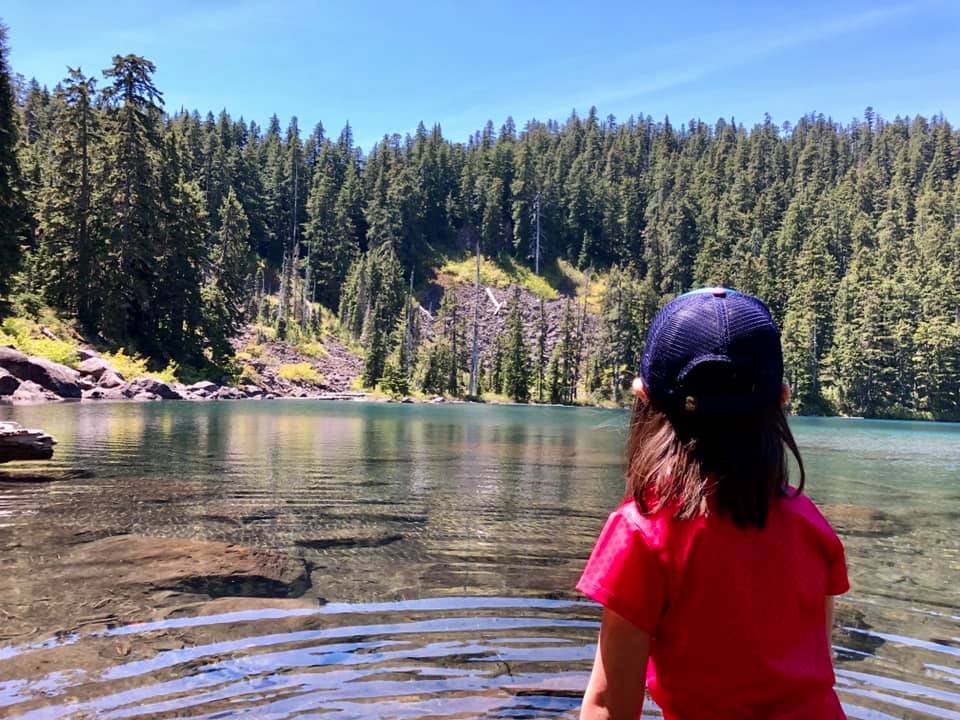
  • June Lake – there are campsites at the lake around 1.25 mile in; no overnight parking is allowed at the trailhead, but there are some old roads and pull-outs near the access road (this will add a little extra mileage)

Book: little feet hiking 2

  • Placid Lake – there are campsites at Placid Lake 1 mile in and Chenamus Lake at 2 miles in; avoid this trail in early summer due to mosquitoes
  • Lewis River Trail – campsites at 2 and 2.3 miles from the trailhead

Book: little feet hiking: Mt. Hood

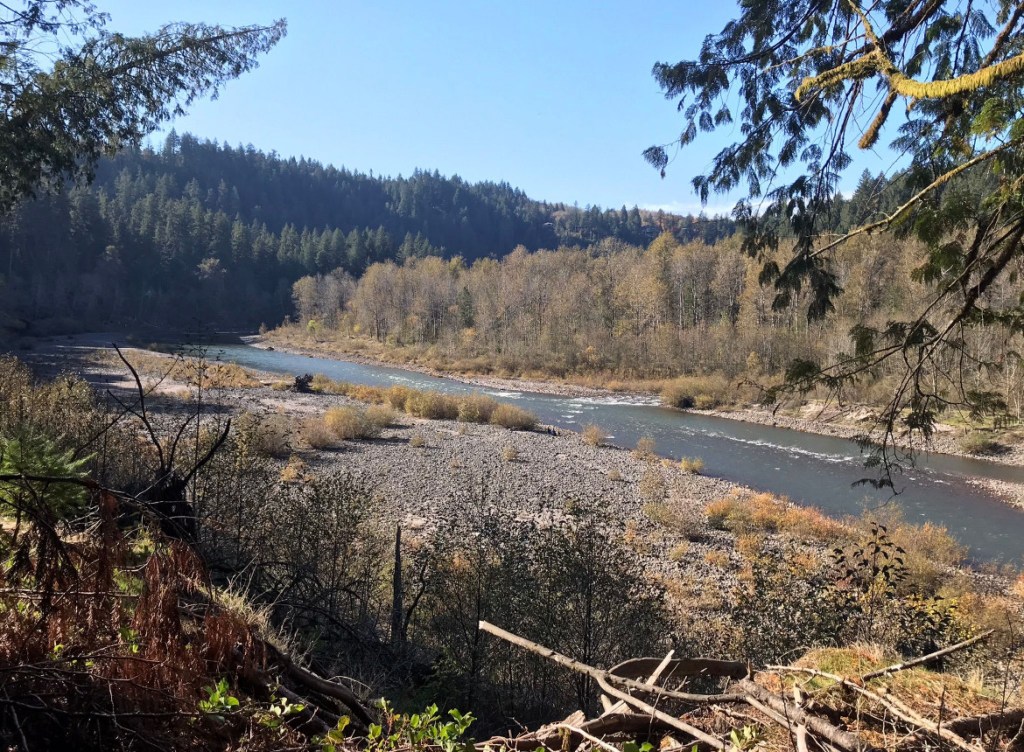
  • Salmon River Trail – there are campsites along the river at around 1.5 and 2 miles in 
  • Burnt Lake – there are several campsites at the lake at 3.3 miles and 1400 feet gain in
  • Mirror Lake – there are multiple campsites at the lake at 2.2 miles in and 650 feet gain in
  • Hidden Lake -there is one campsite near the lake at 2 miles in and 700 feet gain into the hike
  • Lower Twin Lake – there are multiple sites at Lower Twin Lake 2 miles in (although you may need to hike along the additional 0.75 mile lake loop to find a site); there are more sites at Upper Twin Lake 0.7 mile from Lower Twin Lake
  • Catalpa Lake – after coming to the lake, hike to the right and find the campsite 0.75 mile from the trailhead
  • Buck Lake – there are multiple sites at the lake 0.5 mile from the trailhead
  • Meditation Point – there are several sites and a vault toilet at this walk-in campground 0.8-1.5 miles from the trailhead, depending on where you start your hike (0.8 mile from NF-5890 and 1.5 miles from the West Shore Day Use Area); learn more here
  • Boulder and Little Boulder Lakes – there are multiple campsites at both lakes, 0.3 miles from the trailhead to Boulder Lake and 1.2 miles from the trailhead at Little Boulder Lake; Little Boulder Lake is less busy than Boulder Lake
  • Badger Creek – there are at least 4 campsites within the first 3 miles of the hike 
  • Oval Lake – there are several campsites by the lake, 2 miles from the trailhead

If you need some ideas on how to get started, check out these links too:
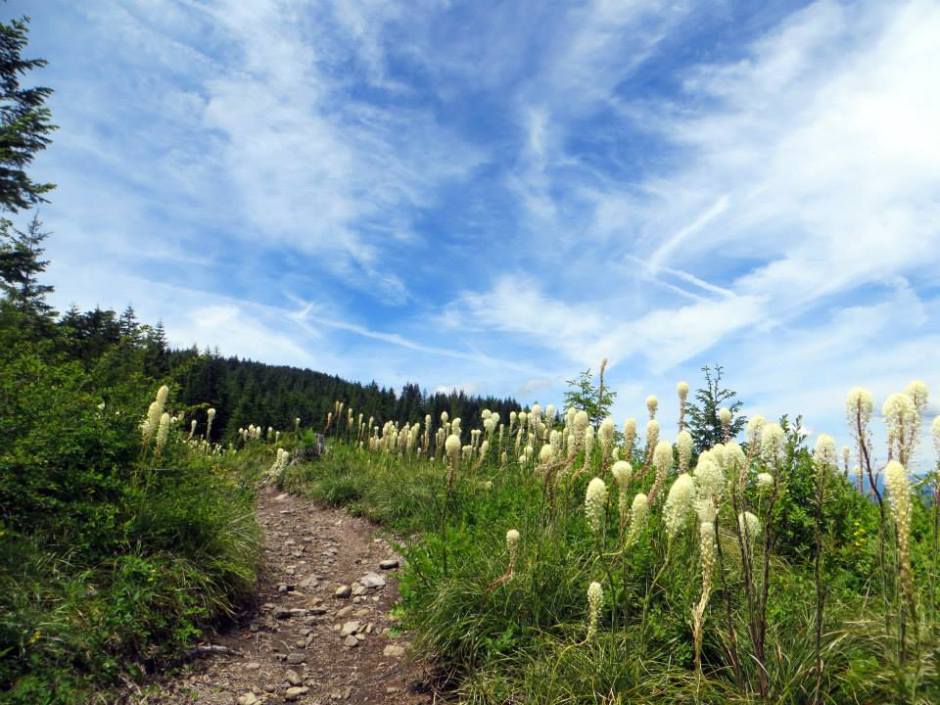
Kid-friendly Beargrass Hikes

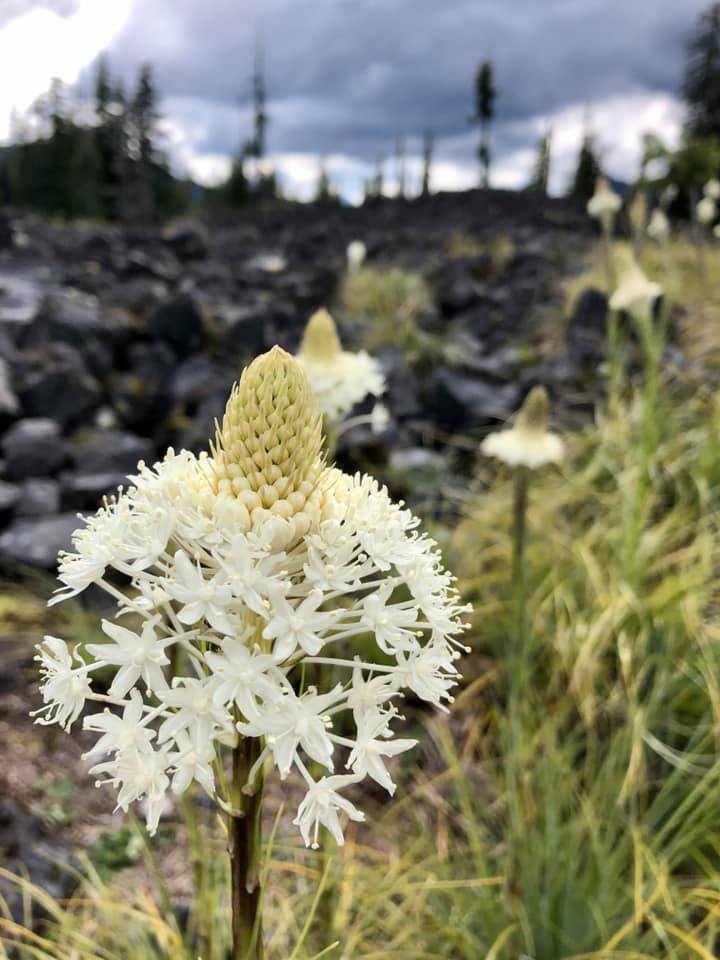
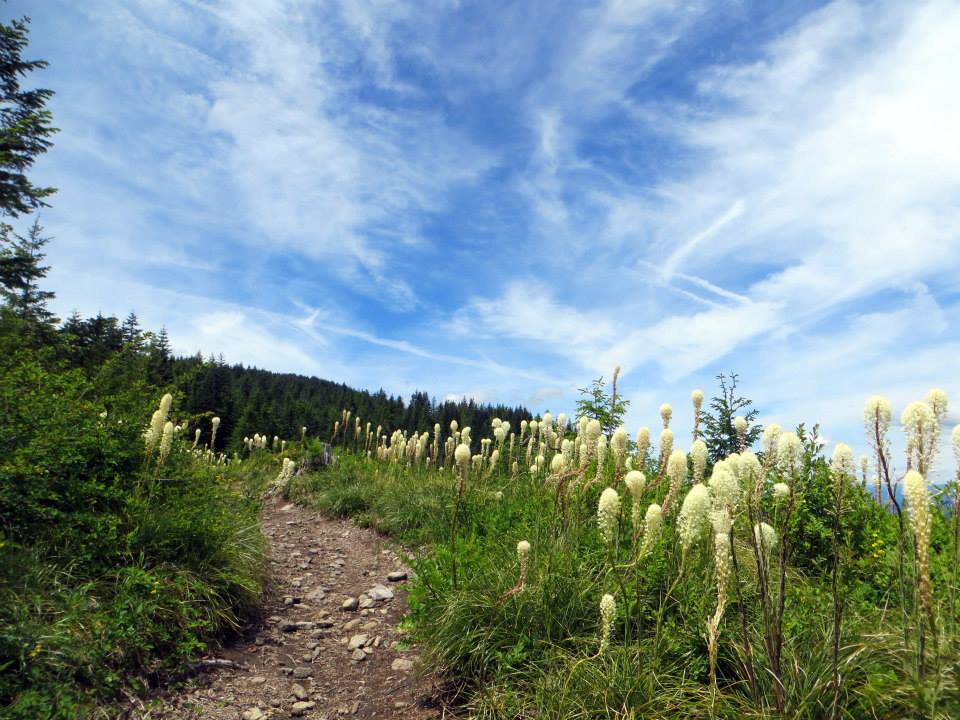
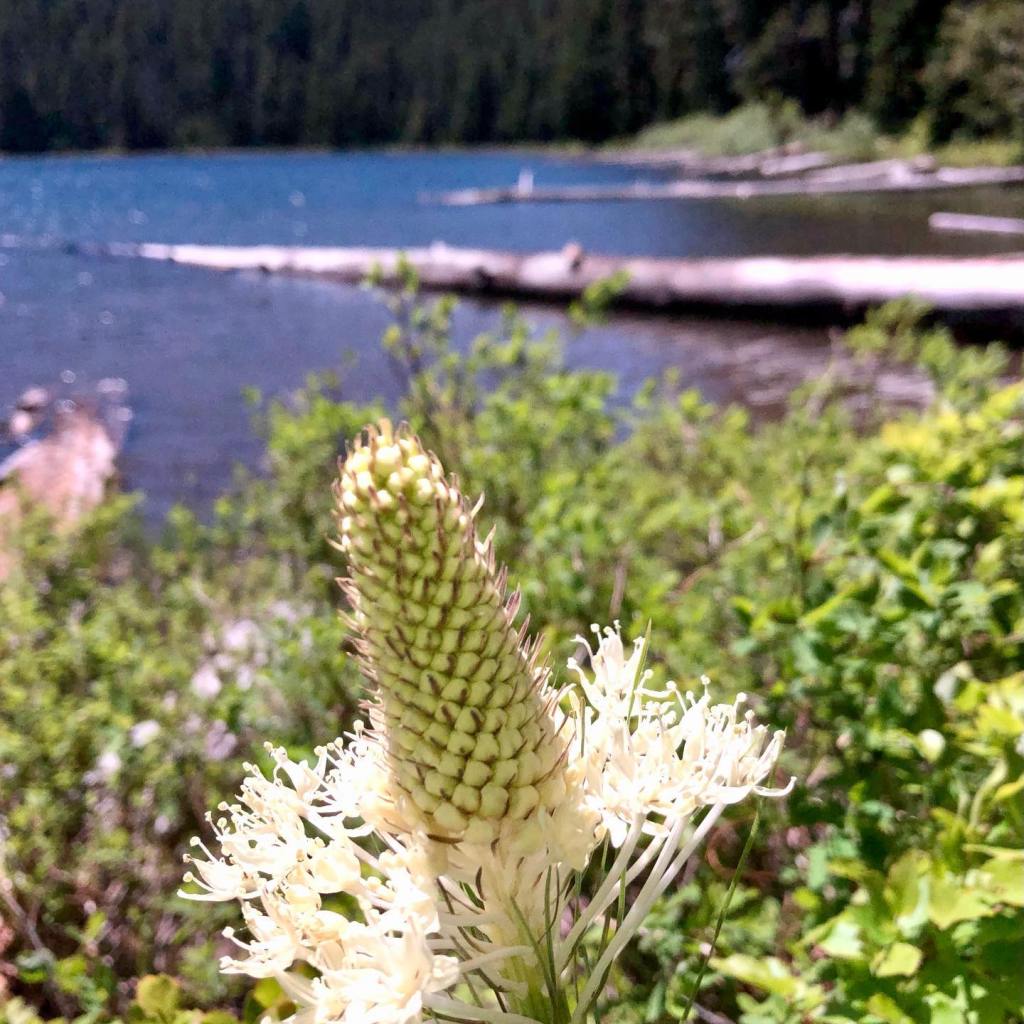
Since I moved to the PNW almost 20 years ago, I have loved beargrass. My kiddo has always loved it too. I’m not sure why – the flowers are kind of stinky if you get your nose up in there! Is it because they look like white truffala trees?  Or maybe it’s because when you look at beargrass flowers up close, you see that the flower is actually lots of little flowers that come together to make one big flower. It may just be one of those things that might not be too exciting until you catch a superbloom. I’ve been fortunate enough to experience quite a few big beargrass blooms, and I think THIS YEAR is primed to be an excellent year for enjoying these beautiful flowers.

Every few years, there is an epic beargrass bloom in the higher elevations in June and July. It’s totally unpredictable. I have always heard that each plant will bloom every seven years, but research shows that the plant will bloom whenever spring rainfall is adequate. Beargrass (latin name: Xerophyllum tenax) is an evergreen perennial flowering plant that is native to the Western Unites States. Beargrass is actually not a grass at all, but instead it belongs to the bunchflower or Melanthiaceae family. Beargrass can grow up to 5 feet tall with a long stalk and small white flowers in a cluster at the top. I’ve always been told that the plant is called beargrass because bears eat it but that is not true. Interestingly, members of the Lewis and Clark expedition in the 1800s referred to beargrass by this name due to its similarity to a plant that they called beargrass. Bears have been known to use the plant to make their dens and deer and elk are known to eat beargrass. Historically, local indigenous groups have used beargrass leaves to weave watertight baskets and beargrass roots to make poultices for wound treatment. Beargrass is also harvested commercially for use in floral arrangements.

Now that you know ABOUT beargrass, where can you find it with your kids this season? Read on!

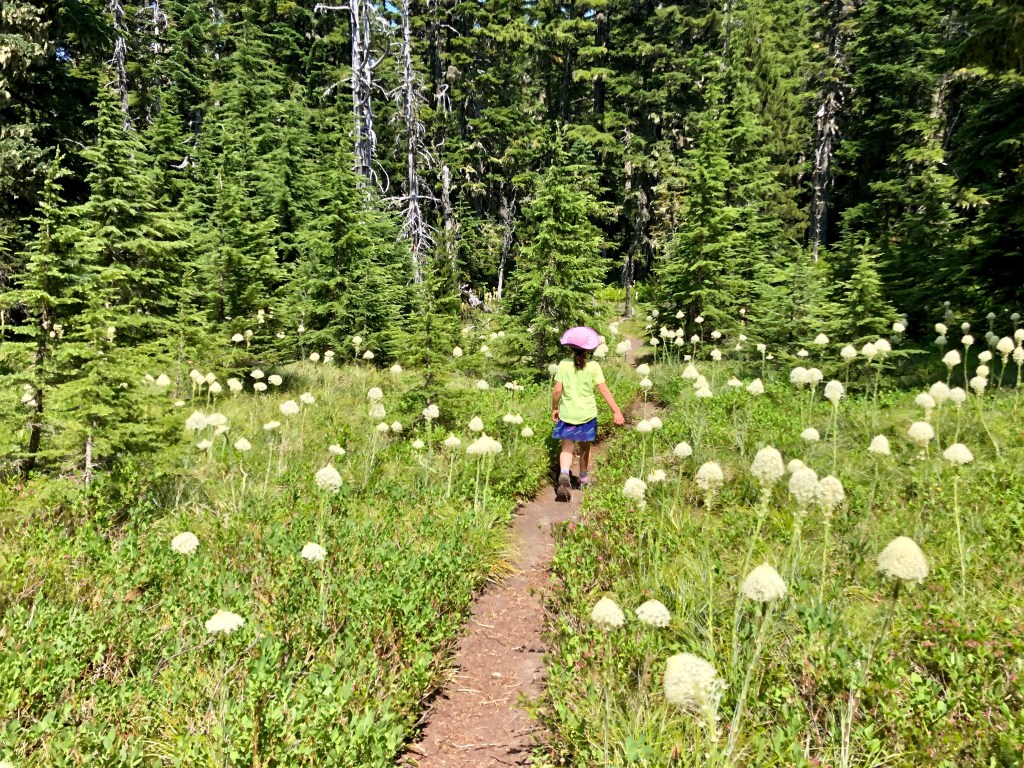
Below are my favorite hikes where you are most likely to see beargrass blooming this June and July. No promises, but these are your best bets for kid-friendly hikes with plentiful beargrass. All of the photos were taken by me in June or July some time during the last 15 years.

Most of these hikes have specific risks like drop-offs, lack of cell service, challenging access roads, or remoteness, and you won’t find many kid-specific descriptions for these hikes. Not to toot my own horn here, but my books go into the greatest detail of any kid-focused description you might find on these hikes. Before heading out on any of these hikes, please pick up a copy on Amazon, at Vintage Books, at the Fort Vancouver Regional Library or at the Multnomah County Library.

Please educate yourself on the risks, recommended extra gear, maps, and other details I include in the book descriptions. Also, check snow levels, especially in the higher elevations on Mt. Hood. No one needs to get lost or hurt looking for beargrass!

Toutle Trail from Red Rock Pass

Bluff Mountain

Larch Mountain (WA)

Lower Twin Lake

Newton Creek

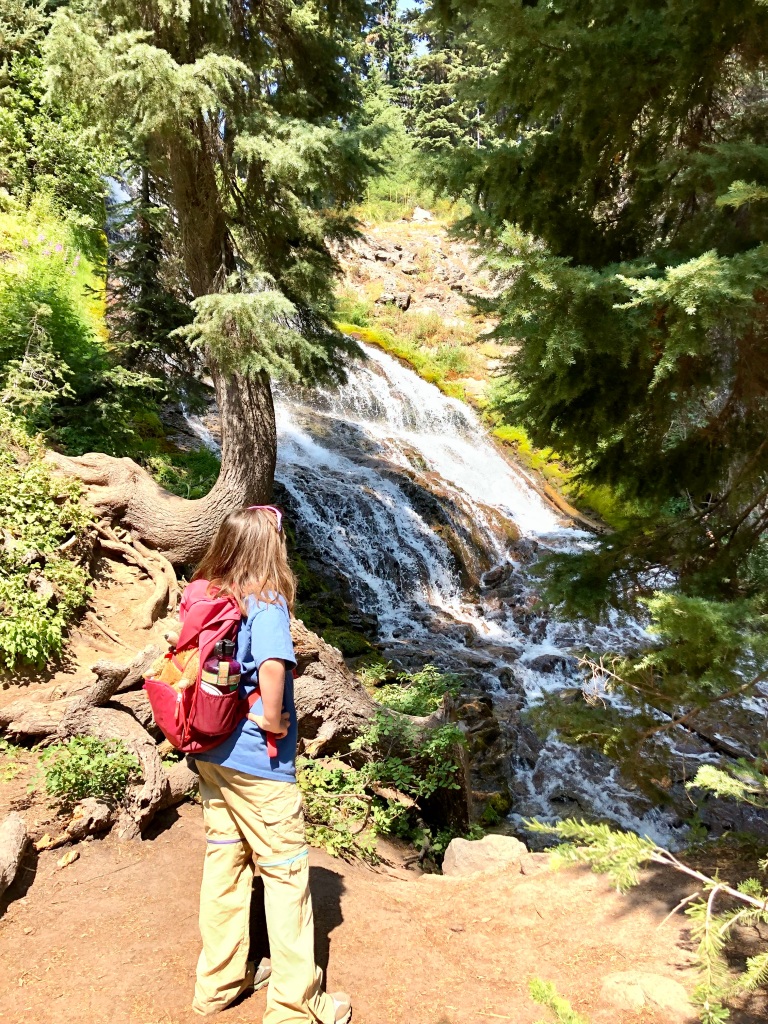
Umbrella Falls

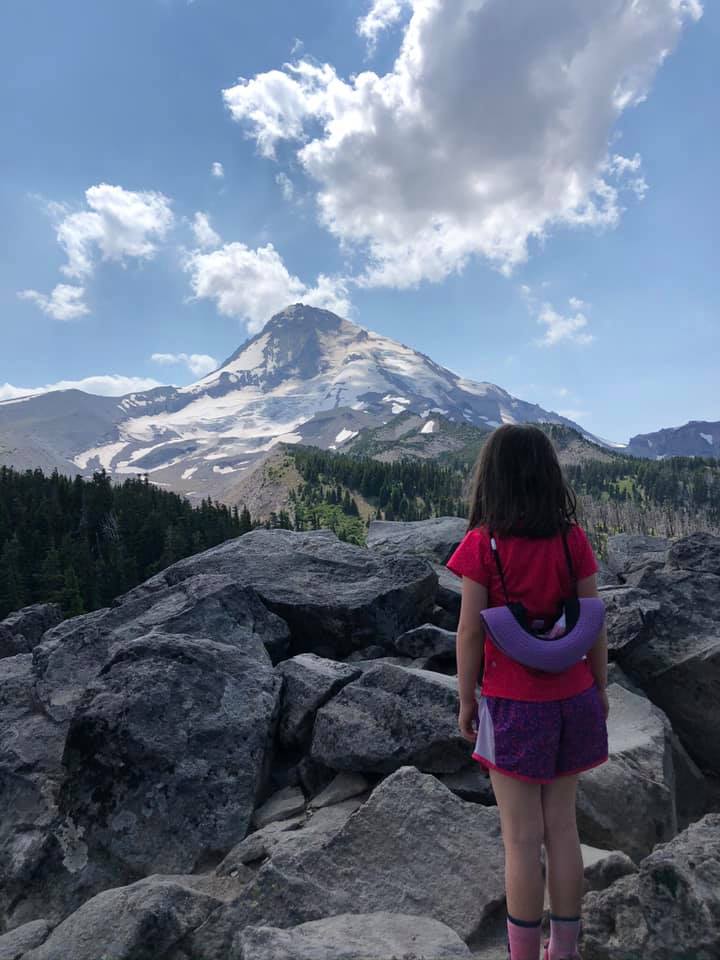
Vista Ridge to the Rockpile

Where to See Salmon Spawning this Fall

P.S. Salmon poisoning is a thing for dogs. Look into this and keep dogs away from spawning areas for their safety.

Lucia Falls Regional Park

  • Easy stroller-friendly hike is appropriate for all ages, although littles will need help staying away from the rocks and walking through the parking lot
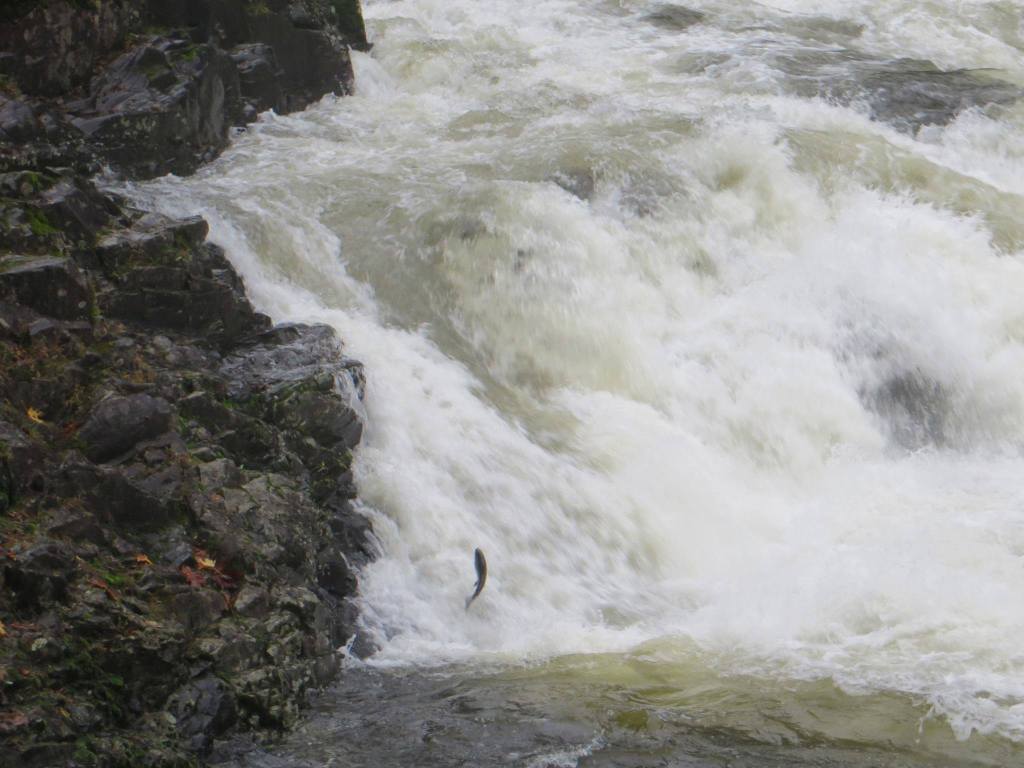
  • You will see salmon jumping the falls starting in late September and through the end of October at least (sometimes you’ll see into December)
  • Check out this video and this post to see salmon jumping there in October
  • You’ll also encounter lovely changing falls colors and neat mushrooms
  • Stop over to Pomeroy Farm’s Pumpkin Lane after your hike if visiting on an October weekend
  • Please avoid ALL water contact to protect the salmon
  • Learn more in little feet hiking

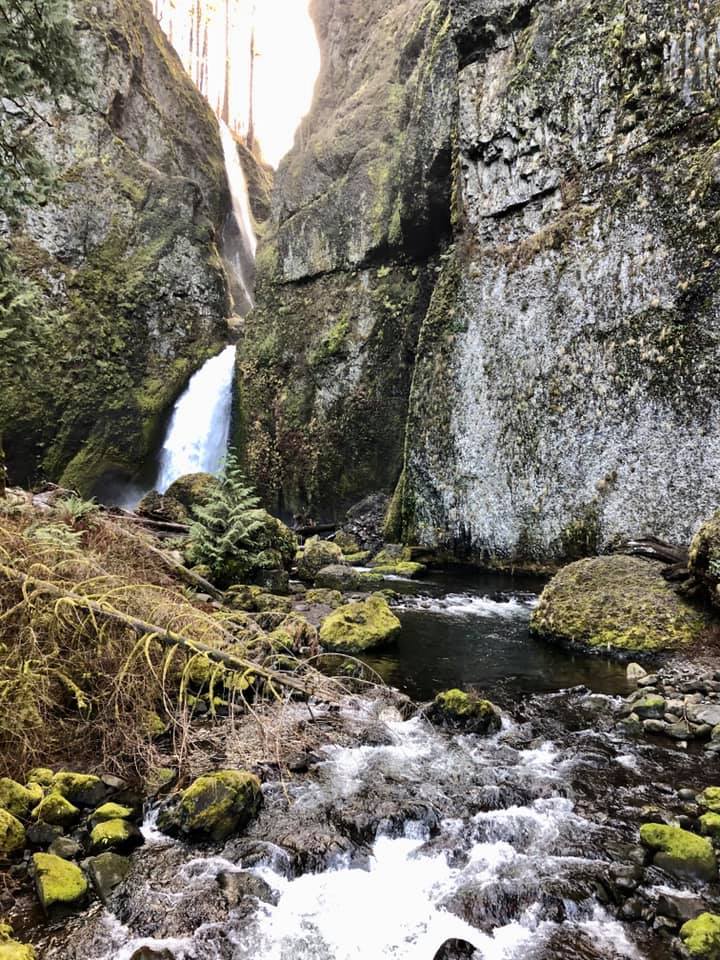
Wahclella Falls

  • Harder hike with dangerous cliff edges
  • This is one of the best waterfall hikes around
  • Avoid this trail during heavy rain due to fire damage and cliffs
  • After your hike, stop by Bonneville Fish Hatchery to see the fish ladder
  • Learn more about this hike and its connection to the hatchery in little feet hiking: Columbia River Gorge

Ruckel Creek

  • Easy hike is okay for all ages but littles will need help staying out of the creek, walking through the parking lot, getting to the bottom of the waterfall, and not falling over the bridge above the waterfall
  • The hike starts from the Eagle Creek trailhead, which is one of the best places in the area to see salmon spawning
  • The Eagle Creek trail is not kid-friendly, but I’ve crafted a more kid-friendly hike starting at this trailhead and passing one of my favorite salmon spawning viewing spots
  • Best time to see salmon spawning here is late-September to mid-October
  • Learn more in little feet hiking: Columbia River Gorge

Oxbow Regional Park 

  • Hikes are okay for all ages, but littles will need help with road crossings and staying out of the rushing and dangerous Sandy River
  • There are several hikes in the book that take you through the park, but this brochure is the best for understanding the annual salmon run
  • When you visit, be sure to leave enough time for kids to play on Oxbow’s two playgrounds
  • There is usually an event at the end of October celebrating the return of the salmon
  • Learn more about the hikes in little feet hiking: Portland Metro

Barlow Wayside

  • Hike is appropriate for hikers who can handle stairs and small cliffs, and you will want to keep littles out of the creek to protect the salmon
  • Watch salmon spawn at Barlow Wayside late September through early December
  • Visit in November for lovely fall colors
  • See if you can find and touch the waterfall along the trail
  • Learn more in little feet hiking: Mt. Hood

Wildwood Recreation Area

  • Two short and easy hikes that are ADA-accessible and stroller-friendly
  • Use caution near the Salmon River’s edge
  • Visit in fall for lovely changing fall colors
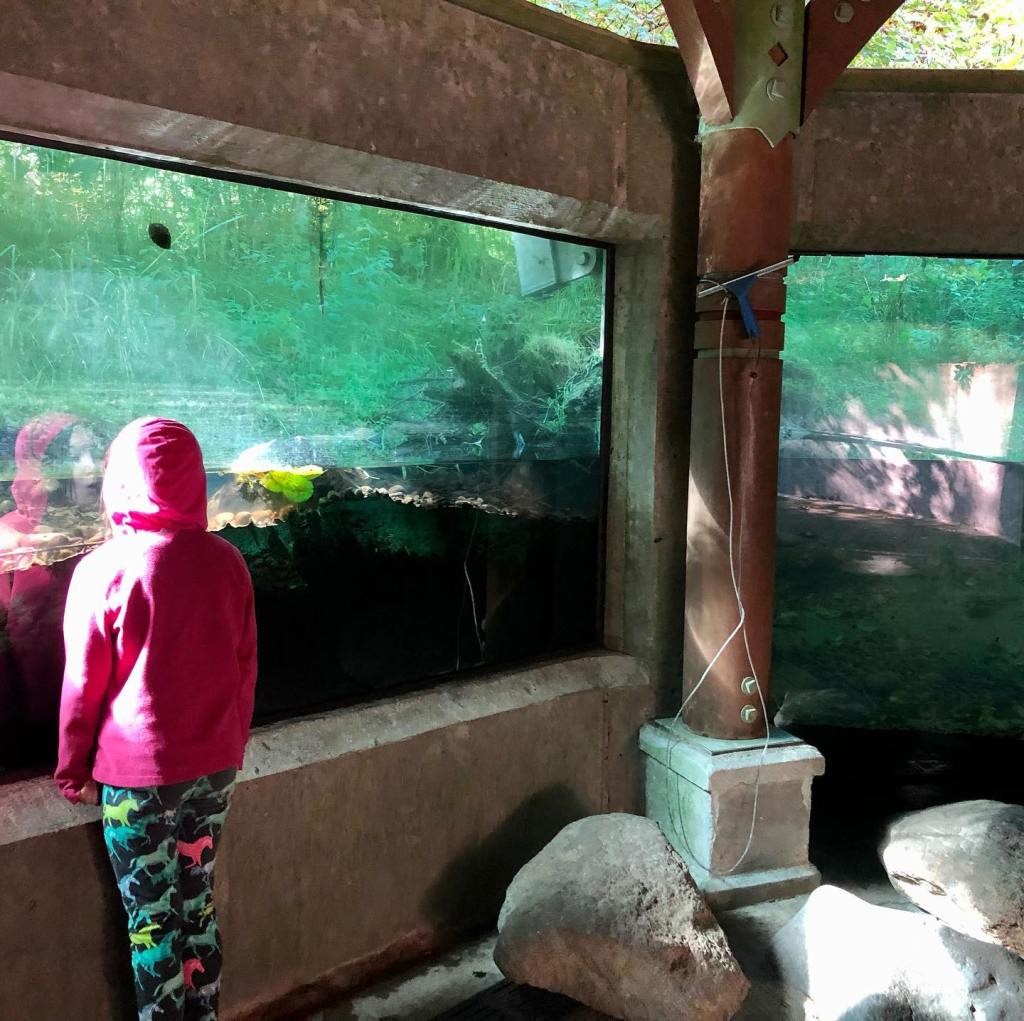
  • Visit the fish viewing window to look for smaller fish
  • Watch for salmon spawning in the Salmon River from late August through November
  • Learn more in little feet hiking: Mt. Hood

Old Salmon River

  • Hike has some cliffier sections, but is okay for most hikers
  • Hike through beautiful old-growth forest along a river named for the very salmon that spawn there
  • Look for salmon spawning late September through early December
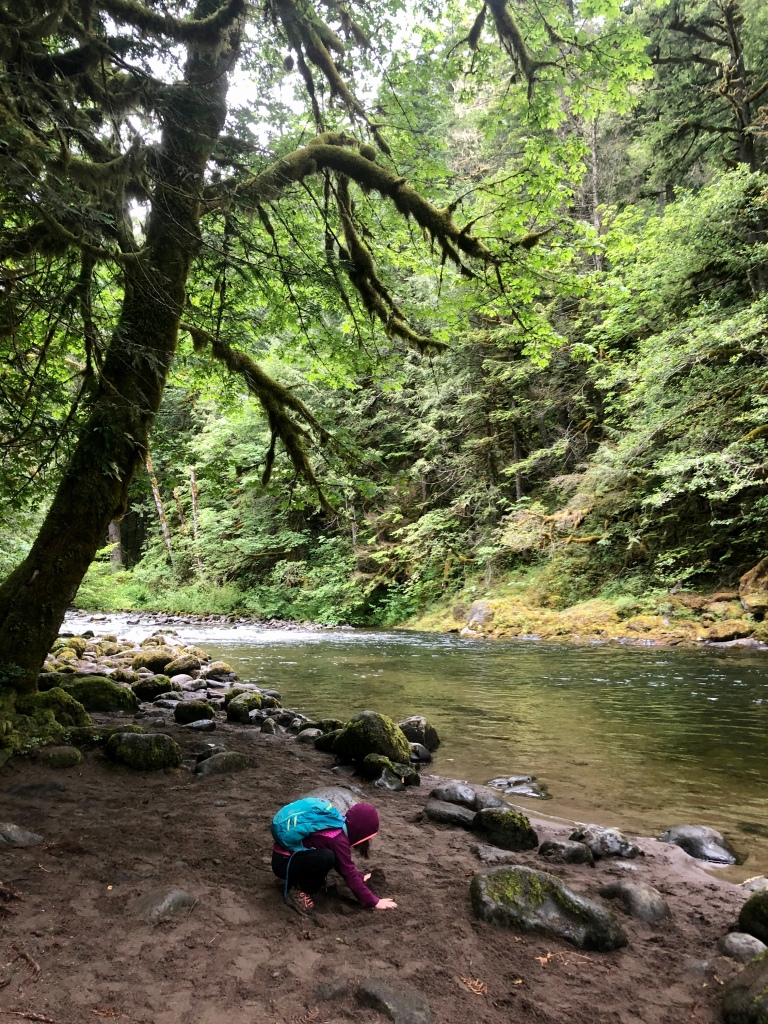
  • Be sure to make some time to play on the river beaches, using caution near the river’s edge
  • There are multiple trailheads for this hike; learn more in little feet hiking: Mt. Hood

Salmon River Trail

  • Harder hike for stronger hikers; there are some cliffs in the beginning of the hike
  • Hike through old-growth forest along the Salmon River
  • Look for salmon spawning late September through early December
  • Look for spawning salmon whenever you are close to the river
  • Learn about nurse logs in little feet hiking: Mt. Hood, and identify them along the trail

Which spot will you visit first?

Kid-friendly Hike at Mt. Hood Meadows

Mt. Hood with one of my favorite wildflower (western pasqueflower) in the foreground

I’ve recently discovered a new kid-friendly hiking route on Mt. Hood, and I just had to share it. I wish I had known about it before I had published little feet hiking: Mt. Hood, but at least I can share it with you here!

Hike Description for the Mt. Hood Meadows Timberline Loop:

  • Level 3
  • Trailhead Elevation: 3,720 feet
  • 3.3 mile loop
  • Around 650 feet of elevation gain
  • Open summers
  • Popularity: Low on weekdays and Medium on weekends

Why Should You Check Out This Hike? This hike really has it all – amazing floral displays, creeks and a small waterfall, and mountain views. If you visit on a day that the lodge is open, there is also a restaurant and flush toilets available. There are no major drop-offs, but you may get your feet wet while crossing the creeks. 

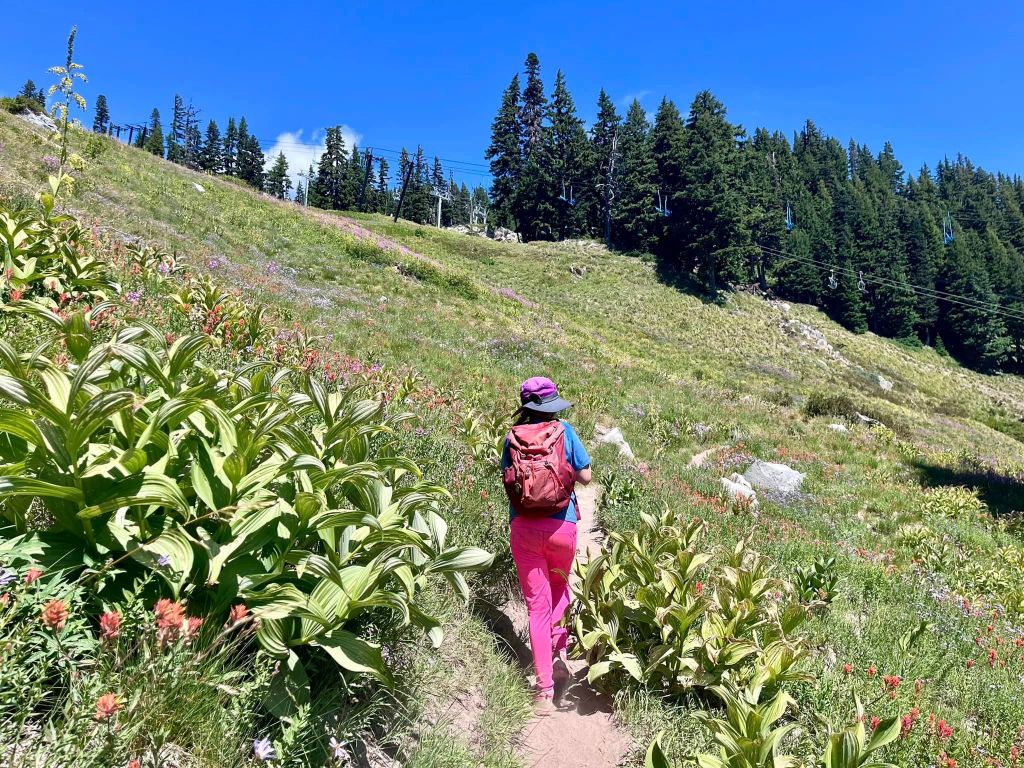
Kiddo hiking past false hellebore and paintbrush

Ways to Engage Your Kids: 

  • Bring a field guide to identify summer flowers like lupine, paintbrush, beargrass, Douglas aster, goldenrod, false hellebore, and western pasqueflower
  • Play in the creeks
  • Pick huckleberries at the end of the summer
  • Look for Mt. Jefferson to the south
Checking out Pencil Falls

Trail Description: 

Walk towards the lodge and then walk alongside the building on its right side. Pass a little playground on the left, and then stay right at a junction. Continue following the service road as it heads towards the mountain and then hike right on Beargrass Trail #1 (see the map here). Follow the trail through meadows and under a ski lift before climbing a bit up to a junction with a service road. Turn left onto the service road and hike uphill. Stay on the road as you pass a service road on the left. At a junction, head left onto a different service road. Come to a junction with the Timberline Trail at 1.1 miles into your hike. 

Head left (west) onto the Timberline Trail. This is where the hike gets really fantastic. On this trail, you will hike through a few creek crossings, past a pretty waterfall called Pencil Falls, in and out of colorful meadows, and alongside large rock walls. Hike on this trail for 1.1 miles before coming to a junction with a service road. Just past this junction, you will see a junction with the Umbrella Falls Trail. Turn left onto this trail. Hike through lovely woods and wildflower meadows for about 0.9 miles before coming to a junction with a trail. Go left onto this trail to head back 0.25 mile to the west side of the lodge. 

After your hike, you  can add on a short trip to Umbrella Falls (Hike #33 in little feet hiking: Mt. Hood) by heading to the southeast corner of the parking lot. Find a trail marked for the waterfall and follow this trail for about 1,000 feet before coming to Umbrella Falls.

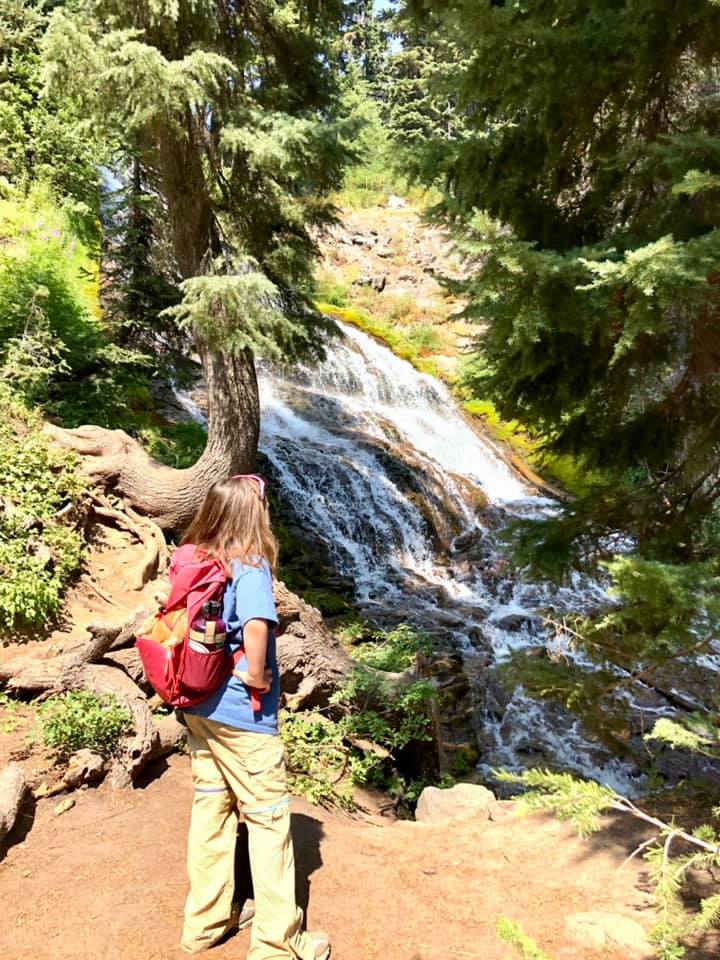
Checking out Umbrella Falls

Important Things to Know:

  • Seasons: These trails are only open in the summer; confirm seasons here
  • Permits: No passes required
  • Recommended map and/or links: Map here
  • Dogs okay? Yes, on leash
  • Conveniences: Restrooms and restaurant inside the lodge, which is open Thursday through Monday; confirm hours here
  • Toilets: Restrooms available inside lodge on open days; the closest vault toilet is available at the Bennett Pass Trailhead 2 miles away
  • Risks specific to the trail: Mosquitoes early in summer; high altitude; sun exposure; lots of pollinators like bees; work vehicles on the service roads; creek crossings
  • Recommended extra gear: Mosquito repellent early in early summer; extra water; sun protection
  • Trailhead GPS coordinates: 45.329750, -121.662738
  • Driving directions: From the Highway 26/Highway 35 interchange, drive east on Highway 35 for 6.1 miles. Take the exit toward Bennett Pass and Mt Hood Meadows, staying left as you exit. Continue onto Mt. Hood Meadows Drive for about 1.5 miles to the parking lot. The lodge’s parking area is not open to the public on Tuesdays and Wednesdays, so on the those days you will need to park on the side of the road just outside the gated entry to the parking lot. 
Pretty forest along the trail

Mt. Jefferson, as seen from the trail

Hike under these ski lifts

Mt. Hood Must-do Summer Hikes and Campground Recommendations

Pro-tips for hiking in the summertime around Mt. Hood:

  • Remember that not every trail will be right for your family. I go into this more in my books, but please assess your family members’ hiking abilities and pay attention to the risks outlined so that you can determine if a trail is right for your family. Many trails in the Mt. Hood area are quite remote, and you may encounter wildlife. Thoroughly-researched trail guides will prepare you better than free apps generated by all types of users.
  • If it is warm in town, it still may be cool in the mountains. On the morning of your hike, check daytime and overnight weather conditions and make sure to bring the right gear. Often, mountain mornings start out foggy/cloudy and afternoons get sunny. It is good to plan for changing weather conditions. To find the most accurate forecast, visit NOAA, and click on the spot closest to where you’ll be hiking (check the elevation).
  • Make sure to check mountain snow levels.
  • Educate yourself on summer safety.
  • Don’t forget your mosquito repellant, sun protection, and anti-itch cream!
  • Check for wildfires and smoke, as well as air quality.
  • In summer, water can still be cold and swift or even unsafe due to toxins. Washington.gov has great tips for keeping kids safe or learn more about kids and water safety here.
  • Maintain reasonable expectations and have fun!

WEST SIDE HIKES

Old Salmon River Trail

  • 1.2 to 2.8 miles round trip
  • Shady trail with big trees and beautiful river
  • Auto break-ins can be an issue here, so plan accordingly with this advice
  • Great for a cloudy day up on the mountain
  • Learn about the old-growth trees you’ll encounter in little feet hiking: Mt. Hood

Little Zigzag Canyon

  • 2.4 miles round trip
  • This hike is an excellent way to experience the alpine areas of Mt. Hood with the comfort of flush toilets inside historic Timberline Lodge
  • See if you can spot Trillium Lake and Mt. Jefferson
  • There are some drop-offs on this hike, so use caution
  • Keep an eye and ear out for marmots (learn more in little feet hiking: Mt. Hood)

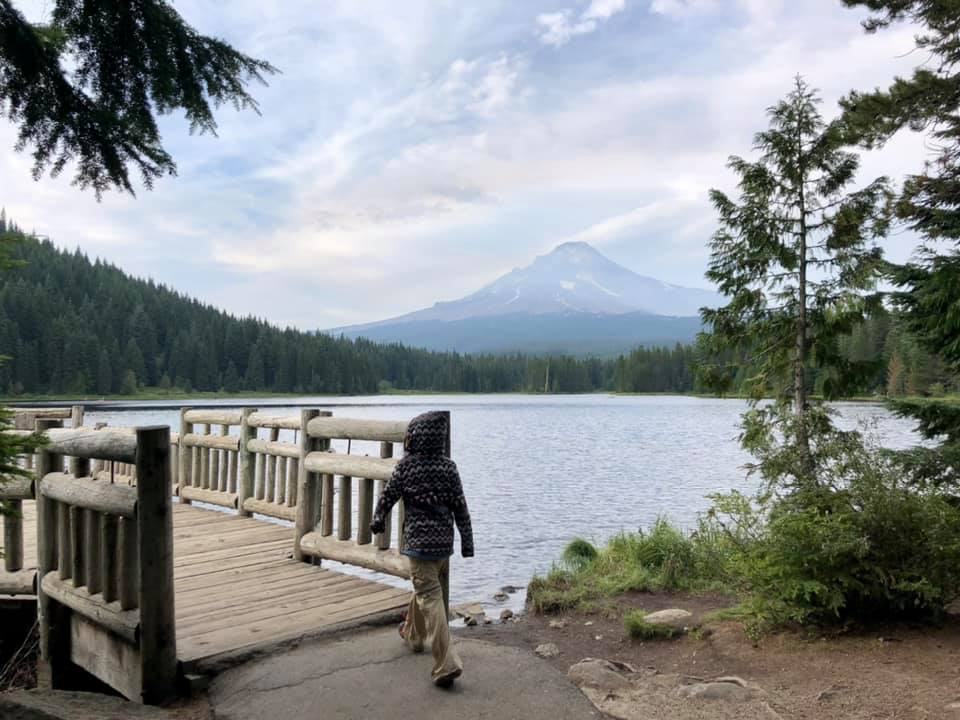
Trillium Lake

  • 1.9 mile round trip loop
  • Add on a swim or boat rental after your hike, or consider camping in the adjacent campground
  • Very busy on summer weekends, so consider visiting on a weekday
  • Learn about the historical significance of this neat area in little feet hiking: Mt. Hood

SOUTH SIDE HIKES

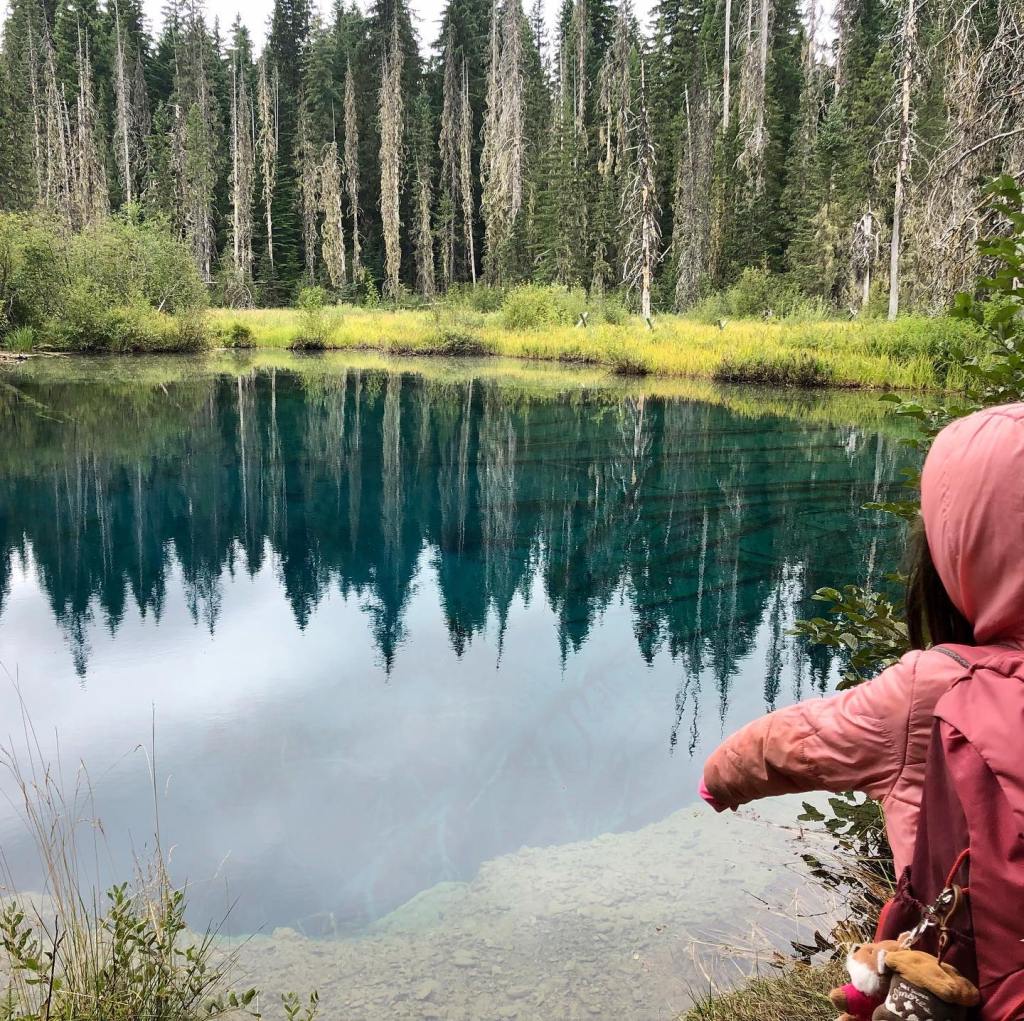
Little Crater Lake

  • 1.4 to 3.2 miles round trip
  • Barrier-free trail to a very geologically-interesting turquoise lake; less barrier-free beyond
  • Swimming isn’t allowed in the lake, and bug spray is a good idea
  • Great for a cloudy day up on the mountain
  • Learn about how Little Crater Lake was formed in little feet hiking: Mt. Hood
  • Consider making it an overnight at adjacent Crater Lake Campground

Buck Lake

  • 1 mile round trip
  • The lake destination is a great place to wade in the water, go fishing, or look for rough-skinned newts
  • The trailhead can be hard to find and there is no cell service; find directions and weblinks in little feet hiking: Mt. Hood
  • Great for a cloudy day up on the mountain

Lower Twin Lake

  • 4 miles round trip
  • This busy hike takes you along the Pacific Crest Trail to a picture-perfect lake
  • Consider bringing your overnight gear and nabbing a lakeside campsite
  • Great for a cloudy day up on the mountain
  • Nearby Frog Lake Campground and Day Use Area is fantastic for viewing frogs in summer

Anvil Lake

  • 2.9 miles round trip
  • This hike is more obscure and remote, so you’ll definitely need to arrived prepared (get all the deets in little feet hiking: Mt. Hood)
  • One of my favorites, this hike takes you through old-growth forest and through boggy meadows to a lovely lake
  • Great for a cloudy day up on the mountain
  • Keep an eye out for elk and lots of wildflowers
  • Consider booking a campsite at nearby Timothy Lake

EAST SIDE HIKES

Cloud Cap/Tilly Jane Historic District

  • 1.7 to 2.1 miles round trip
  • The view of Mt. Hood from Cloud Cap is one of the best around
  • Keep an eye out for marmots in the rock fields
  • Bring overnight gear to stay in adjacent Tilly Jane or Cloud Cap Saddle campgrounds
  • Learn about the historic Cloud Cap Inn and Tilly Jane Historic District in little feet hiking: Mt. Hood

Five Mile Butte

  • 1.4 to 4.4 miles round trip
  • This hike offers up a relatively unique east-facing perspective of the drier part of the state
  • You won’t find this hike description anywhere other than little feet hiking: Mt. Hood
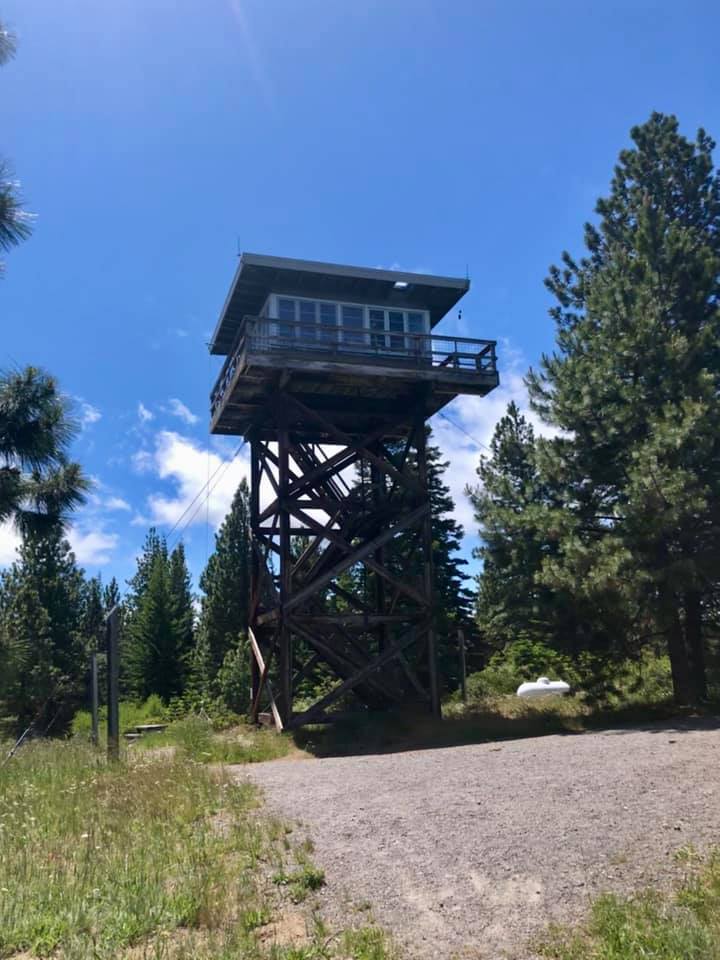
  • Please respect any visitors who are paying to stay at the lookout; you won’t be able to go up the stairs or in the lookout, but you can still walk underneath it

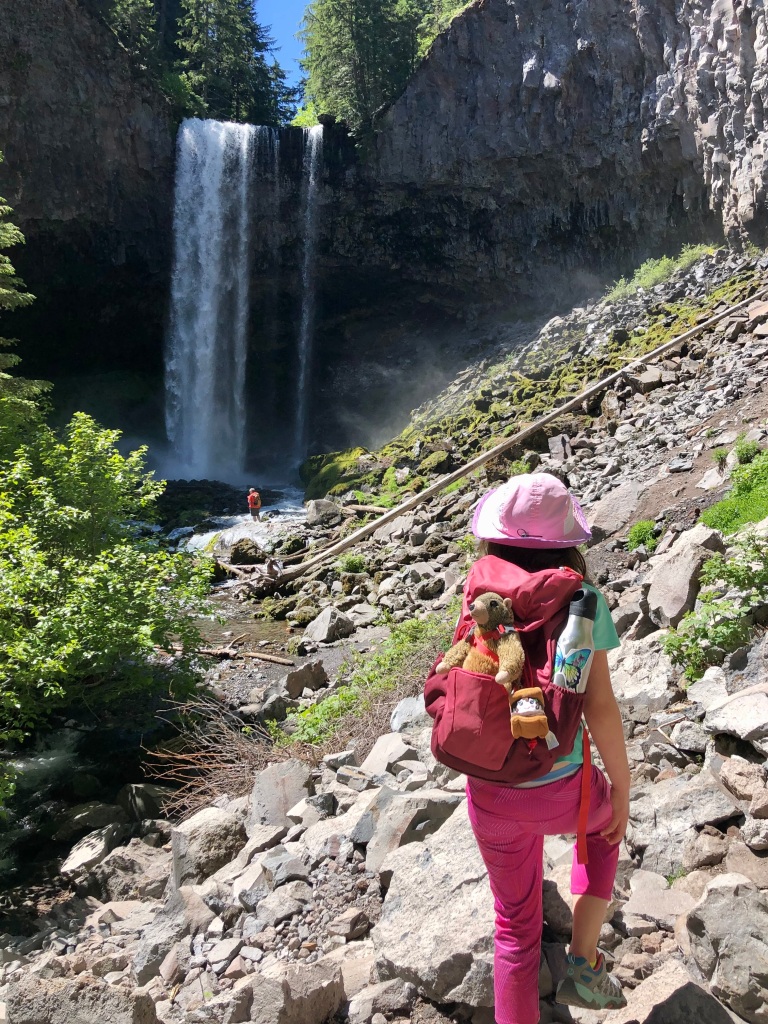
Tamawanas Falls

  • 3.8 miles round trip
  • The waterfall is pretty epic, and there are some neat rock formations seen from the trail
  • The trail has some cliffs and challenging rock fields
  • It can be quite busy on summer weekend, and is great on a cloudy day
  • Nearby Nottingham Campground is a family favorite

Umbrella Falls

  • 4.1 miles round trip
  • While the destination is a lovely waterfall, I hike it for the spectacular wildflowers blooming in summer
  • Keep an eye out for Mt. Hood views and bring bug spray
  • Great for a cloudy day up on the mountain
  • Read up on the descriptions and risks (like a few cliffs) in little feet hiking: Mt. Hood

Lookout Mountain

  • 2.5 or 2.7 mile round-trip miles
  • Hike up to an amazing 360-degree mountaintop viewpoint without too much elevation gain; great for kids who want to summit a mountain
  • There are cliffs along the trail; please read up on the risks of this particular trail
  • Look for wildflowers in the meadows
  • Add in some place-based learning by reading about the rain shadow effect in little feet hiking: Mt. Hood, and then seeing if first-hand from the summit of Lookout Mountain

NORTH SIDE HIKES

Lost Lake Lakeshore Trail

  • 1.6 or 3.2 miles round trip
  • Hike through old growth forest and along one of the most picturesque lakes around
  • Consider adding on a campground, yurt, or the lodge stay at Lost Lake Resort
  • Rent a boat at the resort, or plan for some lake play

Vista Ridge to the Rockpile

  • 4 miles round trip
  • This high-elevation hike takes you through wildflower meadows to some awesome views of Mt. Hood (and without the big elevation gain normally required for this type of view)
  • Listen for pikas (learn more in little feet hiking: Mt. Hood)
  • There are cliffs and other hazards along the trail; please read up on the risks of this particular trail

Bald Mountain

  • 1.6 round-trip miles
  • Hike through amazing forest before getting to one of the best Mt. Hood views of all time
  • Look for fairies in the forest
  • There is a very dangerous cliff on this hike; read little feet hiking: Mt. Hood for details on how to prepare for that cliff and where to stop your hike before getting to it

Are you ready to plan for your next adventure? Now go out and enjoy making some summertime family memories!