
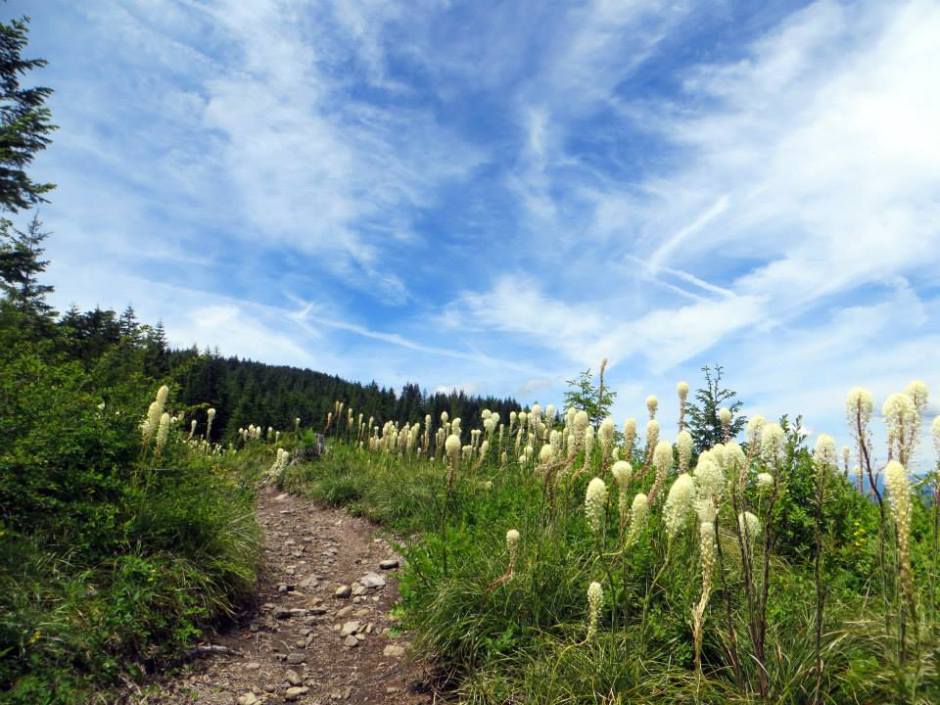
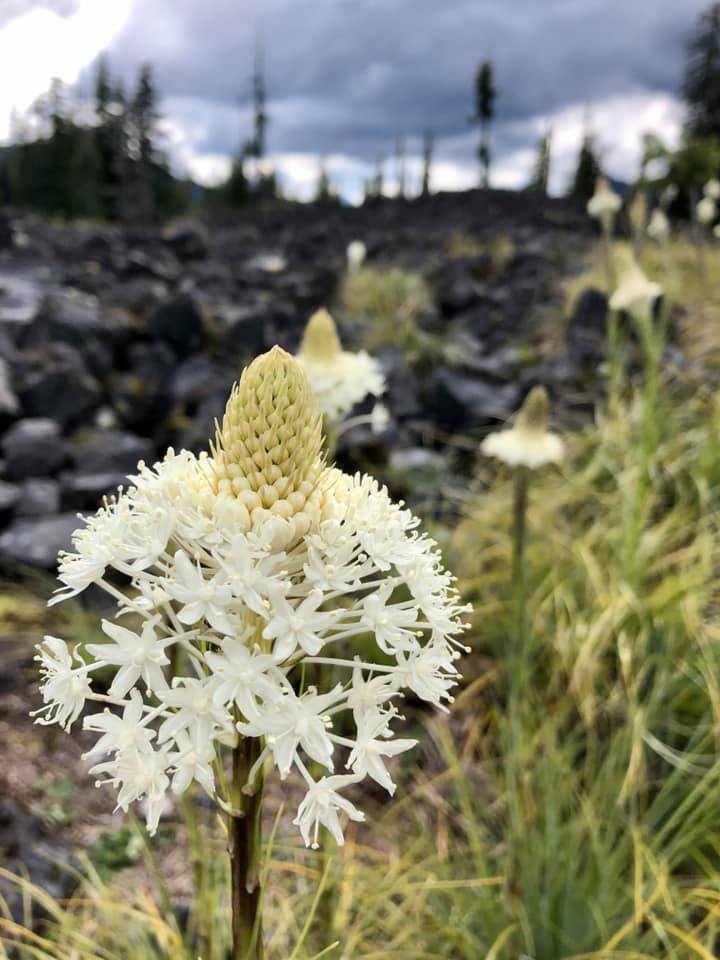
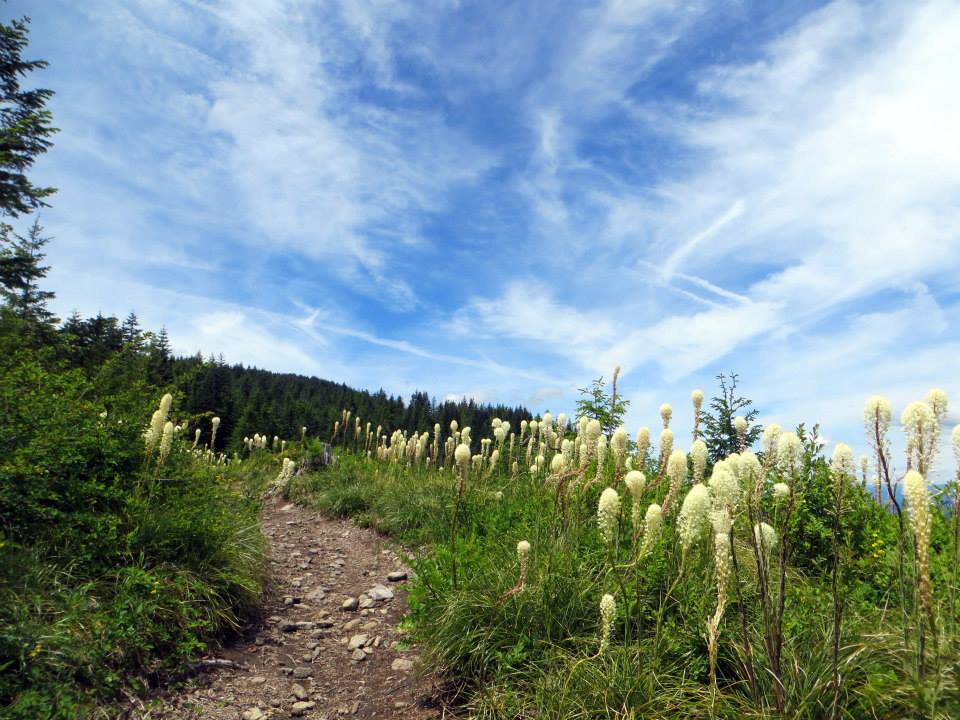
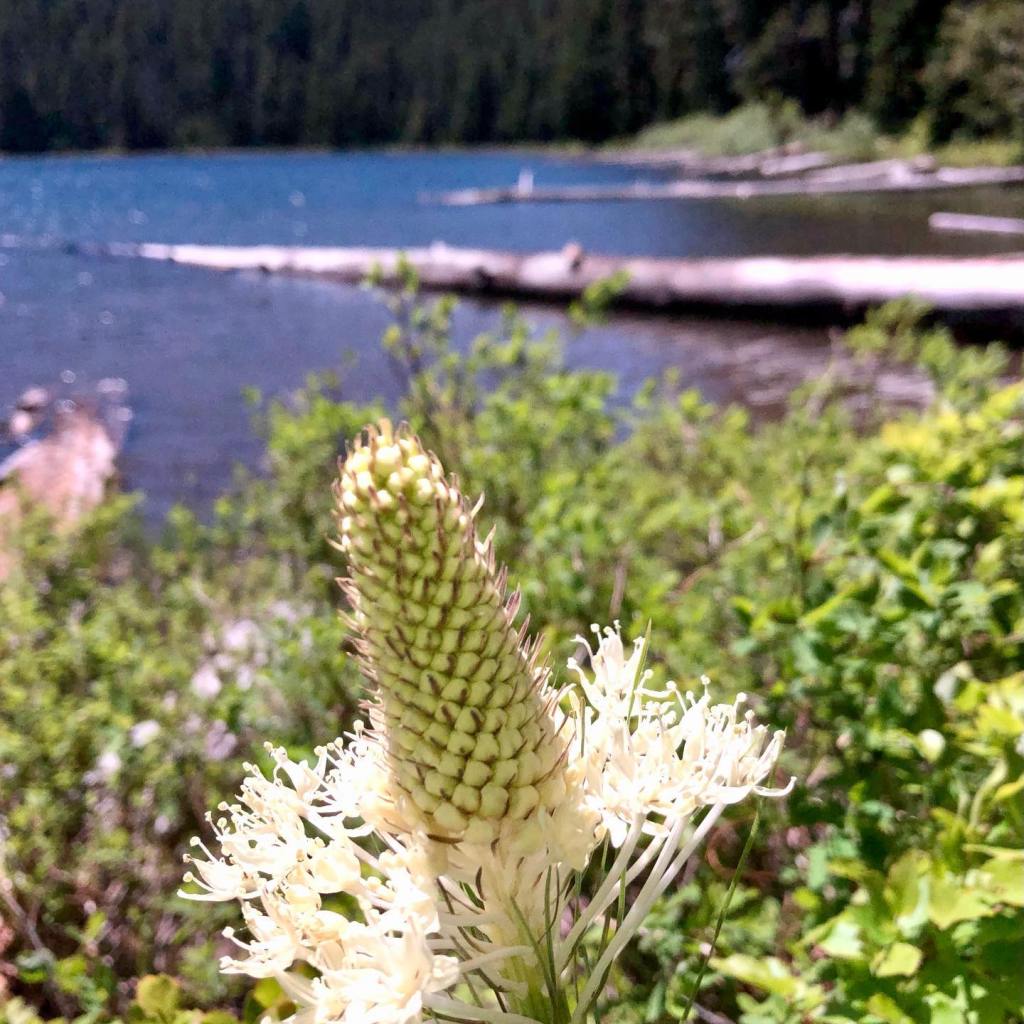
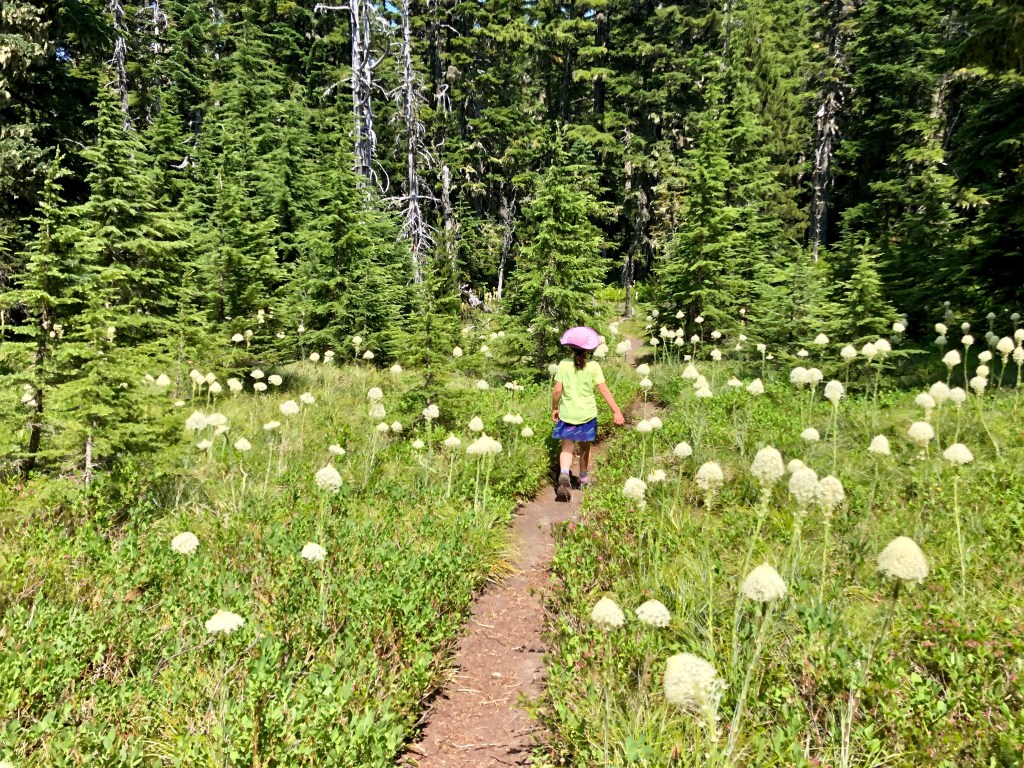
Since I moved to the PNW almost 20 years ago, I have loved beargrass. My kiddo has always loved it too. I’m not sure why – the flowers are kind of stinky if you get your nose up in there! Is it because they look like white truffala trees? Or maybe it’s because when you look at beargrass flowers up close, you see that the flower is actually lots of little flowers that come together to make one big flower. It may just be one of those things that might not be too exciting until you catch a superbloom. I’ve been fortunate enough to experience quite a few big beargrass blooms, and I think THIS YEAR is primed to be an excellent year for enjoying these beautiful flowers.


Every few years, there is an epic beargrass bloom in the higher elevations in June and July. It’s totally unpredictable. I have always heard that each plant will bloom every seven years, but research shows that the plant will bloom whenever spring rainfall is adequate. Beargrass (latin name: Xerophyllum tenax) is an evergreen perennial flowering plant that is native to the Western Unites States. Beargrass is actually not a grass at all, but instead it belongs to the bunchflower or Melanthiaceae family. Beargrass can grow up to 5 feet tall with a long stalk and small white flowers in a cluster at the top. I’ve always been told that the plant is called beargrass because bears eat it but that is not true. Interestingly, members of the Lewis and Clark expedition in the 1800s referred to beargrass by this name due to its similarity to a plant that they called beargrass. Bears have been known to use the plant to make their dens and deer and elk are known to eat beargrass. Historically, local indigenous groups have used beargrass leaves to weave watertight baskets and beargrass roots to make poultices for wound treatment. Beargrass is also harvested commercially for use in floral arrangements.

Now that you know ABOUT beargrass, where can you find it with your kids this season? Read on!
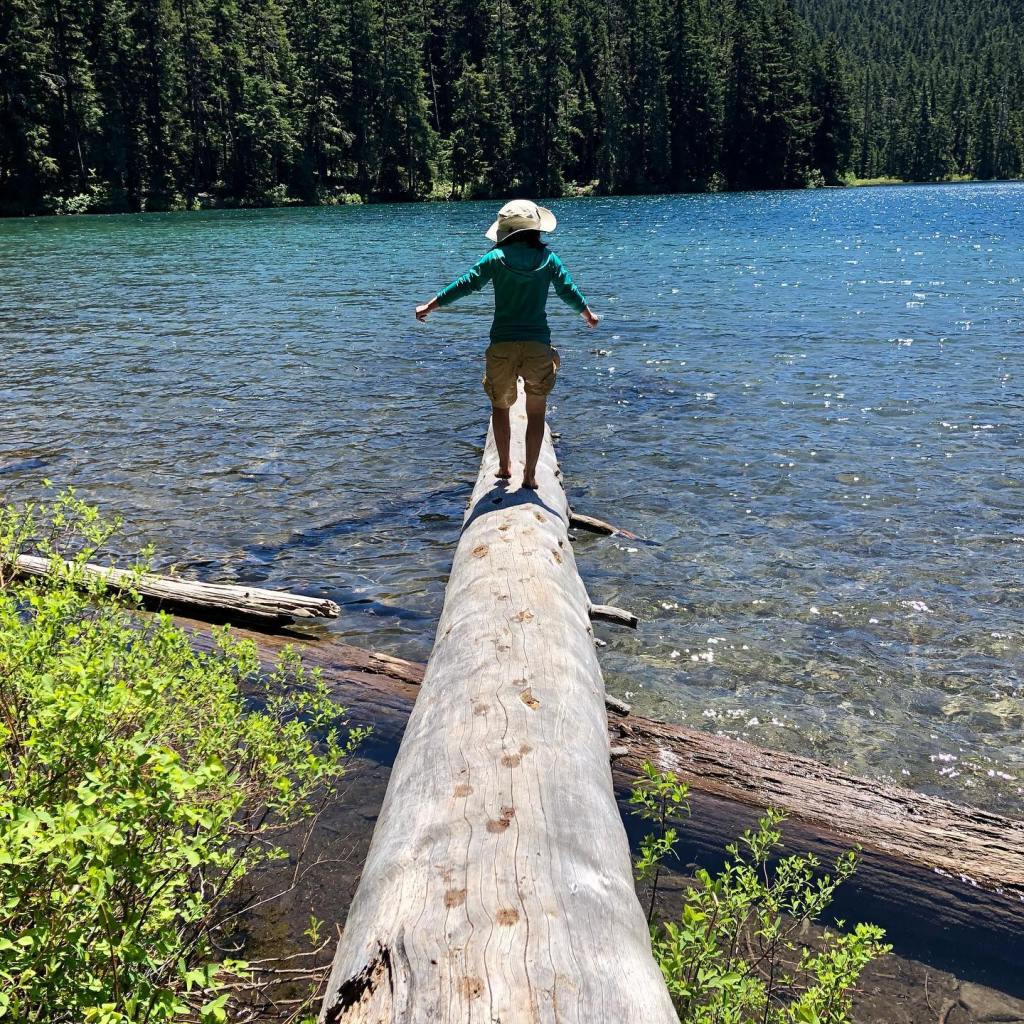
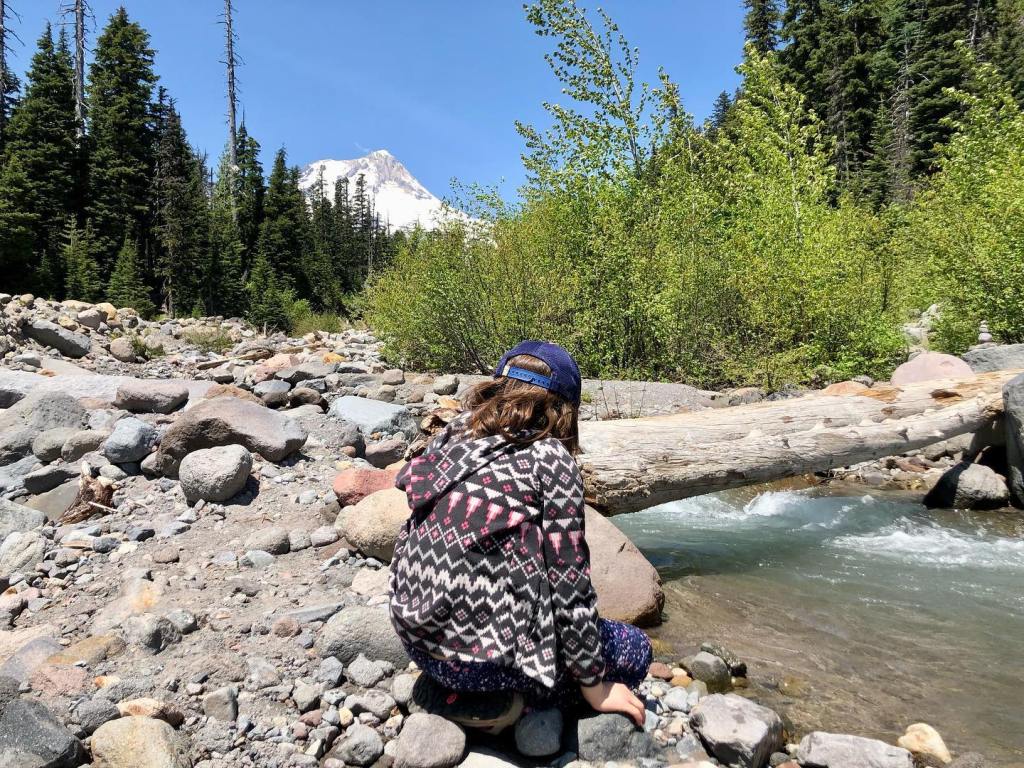
Below are my favorite hikes where you are most likely to see beargrass blooming this June and July. No promises, but these are your best bets for kid-friendly hikes with plentiful beargrass. All of the photos were taken by me in June or July some time during the last 15 years.
Most of these hikes have specific risks like drop-offs, lack of cell service, challenging access roads, or remoteness, and you won’t find many kid-specific descriptions for these hikes. Not to toot my own horn here, but my books go into the greatest detail of any kid-focused description you might find on these hikes. Before heading out on any of these hikes, please pick up a copy on Amazon, at Vintage Books, at the Fort Vancouver Regional Library or at the Multnomah County Library.
Please educate yourself on the risks, recommended extra gear, maps, and other details I include in the book descriptions. Also, check snow levels, especially in the higher elevations on Mt. Hood. No one needs to get lost or hurt looking for beargrass!
BOOK: little feet hiking
Toutle Trail from Red Rock Pass


BOOK: little feet hiking two
Bluff Mountain


Larch Mountain (WA)

Book: little feet hiking: Mt Hood
Lower Twin Lake

Newton Creek

Umbrella Falls


Vista Ridge to the Rockpile


 little feet hiking