How and Where to Hike in Winter around Portland, Vancouver, Mt. St. Helens, Mt. Hood, and the Columbia River Gorge

We all spend a lot of time indoors during our wet Pacific Northwest winters. However, with the right gear and knowledge, you can make winter one of your favorite hiking seasons. Trails are less crowded, migratory birds are in the area, and waterfalls are full. That said, weather can be unpredictable, trails can be muddier, and there may be road hazards.

little feet hiking books have some great information on hiking in the winter. Read on for mom-tested tips on where to hike with kids in the winter, as well as ideas on how to hike safely with kids. Remember that you don’t have to travel far from home or spend a ton of time hiking to make it worthwhile. Even a short hike during the winter can be restorative and meaningful!

For winter hiking with kids, it can be good to stay lower in elevation, closer to cell service, and away from fire-damaged areas. It’s also a great idea to:

  • Plan for quickly changing weather. Check the weather the morning of your hike, but make sure you have extra layers for rain, wind, or hail. Consult WTA’s snow depth map when looking for snow conditions on a trail. Stay out of the forest when high winds are forecasted (rain plus wind can equal trees falling on roads and/or trails).
  • Dress in layers and avoid cotton. The combination of cold temperatures and rain can easily put you (and especially kids) in hypothermia territory.
  • Learn more about winter hiking from the Washington Trails Association (WTA).
  • Plan for winter driving.
  • Bring a change of clothes, extra socks and gloves, lots of snacks, something warm to drink, and something warm/dry to sit on.
  • Maintain reasonable expectations and have fun!

Now that you’ve learned a bit on how to hike in the winter, how do you know where to hike with your family? Thankfully, I’ve compiled my favorite winter hikes by book. Check them out below!

little feet hiking

Hike 4 in little feet hiking: Steigerwald National Wildlife Refuge

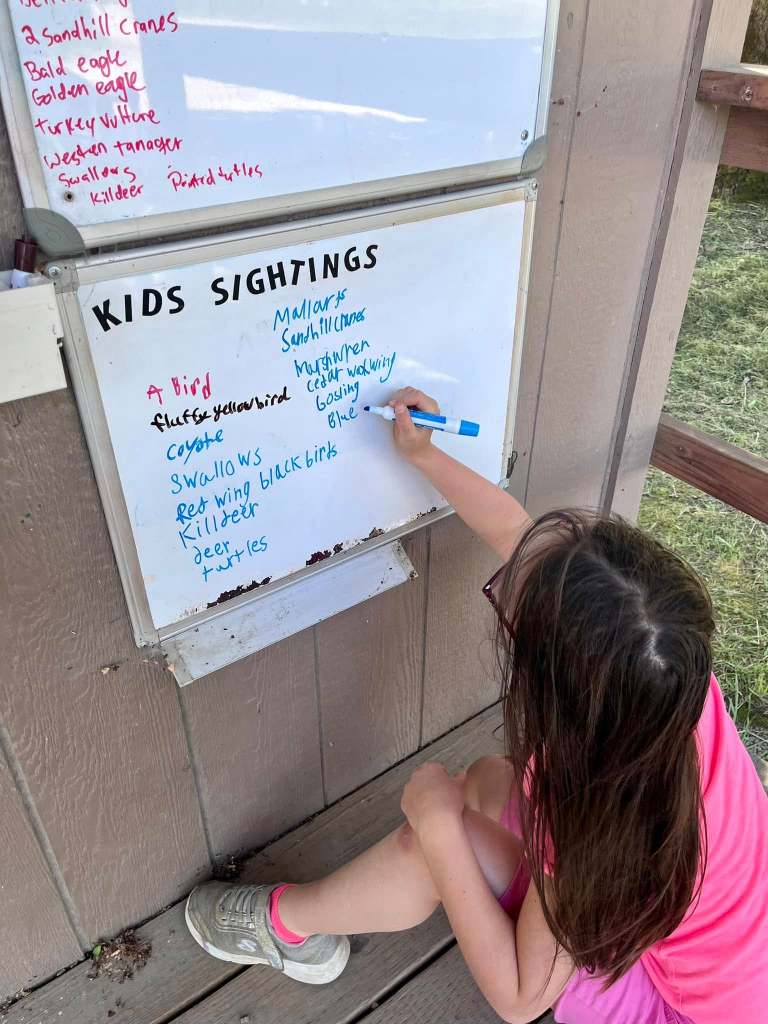
Winter may feel a bit sleepy, but the jogging stroller friendly trail at Steigerwald takes you through an area busy with lots of wildlife. On any given winter day, you could encounter deer, birds of prey, ducks, geese, insects, and more. There are also Mt. Hood and Columbia River views. You can hike as little as 2 miles round trip to get a great nature experience, but there are also miles to add on once you connect to the Columbia River Dike Trail. This trail is a family favorite – just be prepared for the possibility of lots of wind while hiking here.

Hike 9 in little feet hiking: Ridgefield National Wildlife Refuge – Oaks to Wetlands Trail

Winter is the best time to visit the refuge because of all the migratory birds! You don’t have to walk very far on this easy 2 mile out-and-back trail to see and hear the noisy and beautiful swans that flew south (to our area) for the winter. Along the trail, you may even come across deer, birds of prey, ducks, and more. Bring a pair of binoculars and be sure to stop to read any interpretive signs. Consider a drive on the nearby Auto Tour Route to see even closer-up views of winter waterfowl and birds of prey. There is a fee to park.

Hike 16 in little feet hiking: Bells Mountain Trail from Cold Creek Day Use Area

This hike in the Yacolt Burn State Forest is only 27 miles from downtown Vancouver, yet it feels like it is deep in the wilderness. I love this trail in the winter because there is such a deep forest feel that is even more special in the rain. There is so much green from the trees that you totally forget that the skies are gray, and the sound of the rushing creek is quite soothing. The trailhead is down a gravel road, and there is no cell service, so you’ll need to plan to be a little off the grid. A WA Discover Pass is required to park.

little feet hiking two

Hike 8 in little feet hiking two: La Center Bottoms
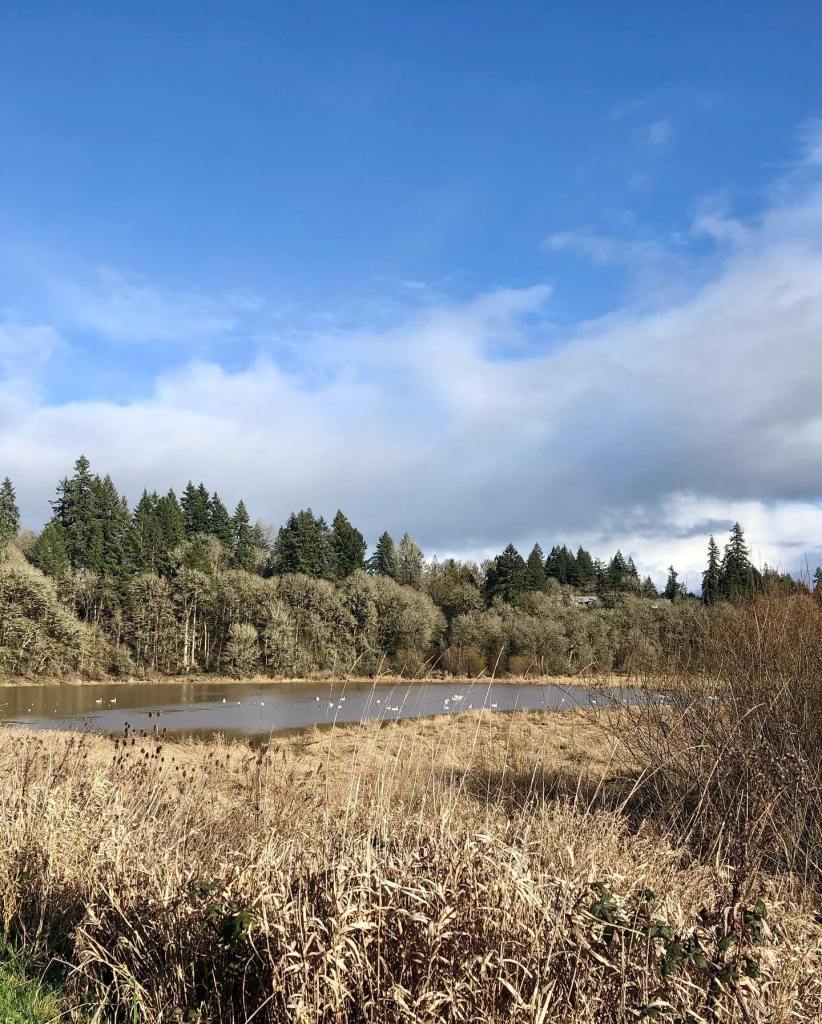
La Center Bottoms is an excellent place for birdwatching, especially for migratory swans and pintail ducks. The trail can be a little muddy, especially when the gravel/dirt trail turns to dirt after the first half mile. You can continue on a dirt trail for another half mile for a 2 mile total round-trip hike. Favorite parts of this trail include multiple bird blinds and fun statues near the trailhead.

Hike 10 in little feet hiking two: Tarbell Trail from Rock Creek Campground
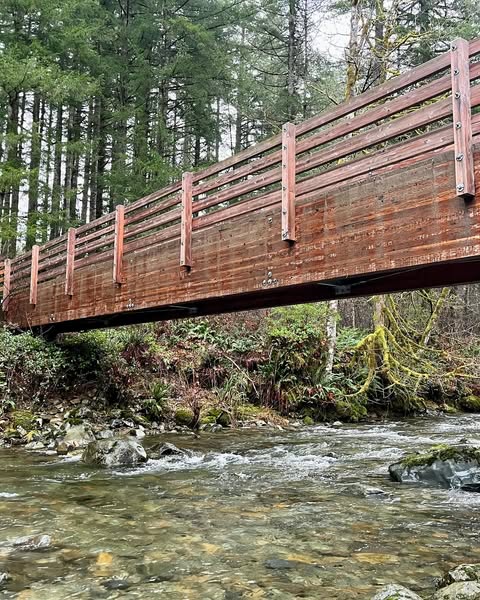
Our family loves this trail as it is rarely busy, there are always cool things to see, and we sometimes see horses! The trail starts out by crossing the creek on a long bridge, hiking through pretty forest (with some impressive nurse logs), and then taking you through a young forest that feels like a wild holiday tree farm. It has been neat to watch the trees grow on this trail over the last 10 years. There are also a lot of large cut stumps that allow for learning about dendrochronology (the study of tree rings). A WA Discover Pass is required to park.

Hike 19 in little feet hiking two: Lacamas Lower Falls
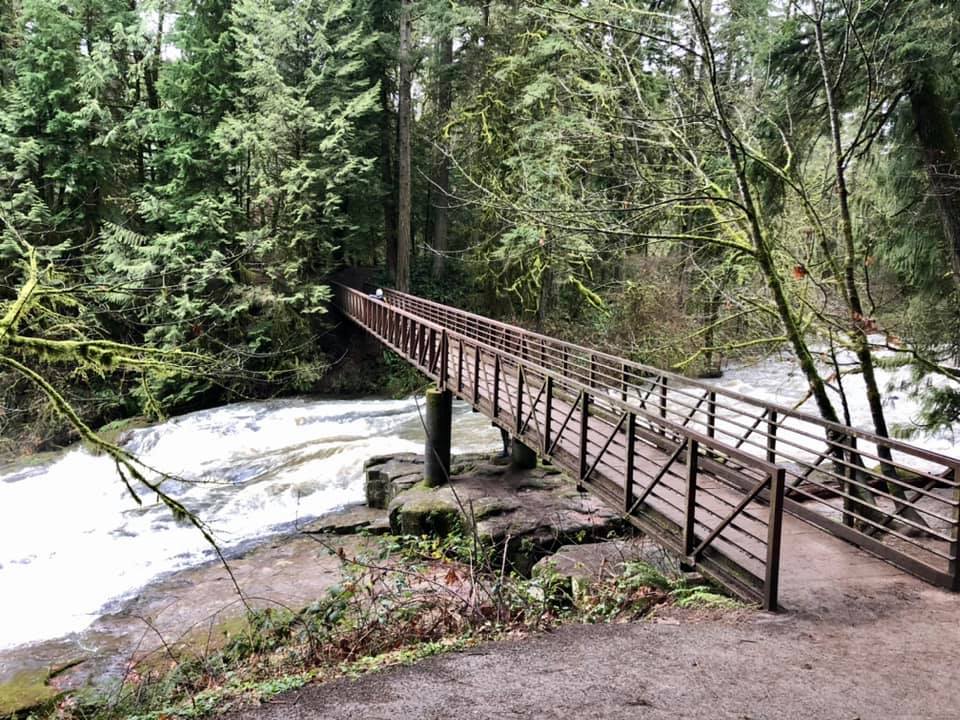
In the winter, there is a lot of water flowing through Lacamas Park and over Lower Falls, which makes it really cool to hike to the falls this time of year. Between the pretty forest, the downed logs that are perfect for climbing, the wide stroller-friendly trail, and the bridge over the rushing creek, it’s a fantastic place to hike with kids. My favorite part of the trail, though, is the rocks. Did you know they are millions of years old? Learn more about that in my book.


little feet hiking: Mt. Hood

Hike 1 in little feet hiking: Mt. Hood: Little Zigzag Falls
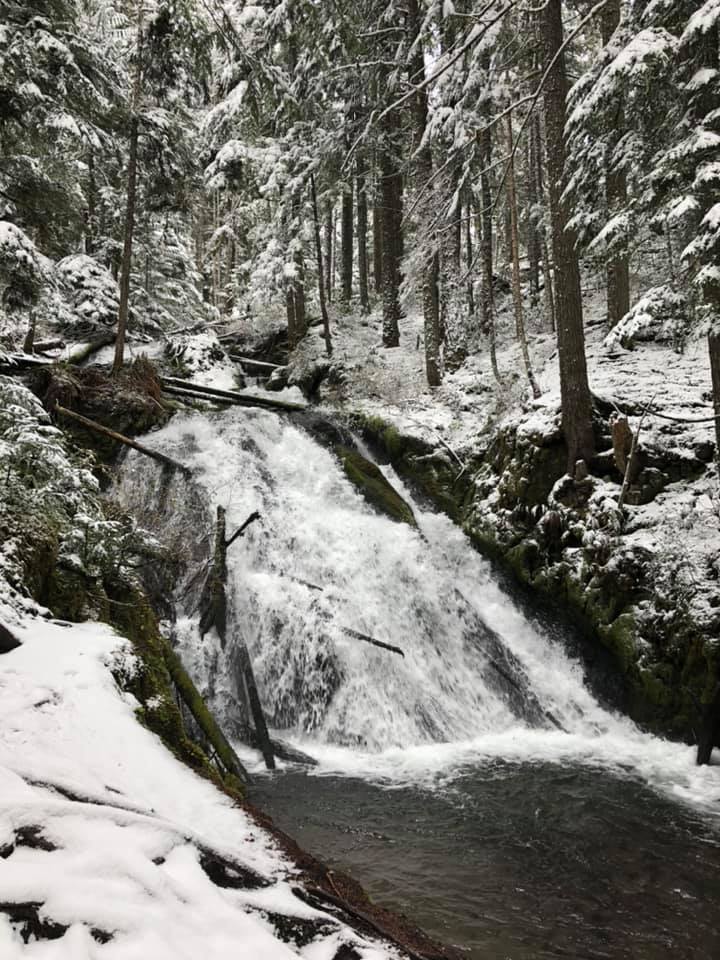
The short hike to Little Zigzag Falls is great any time of the year, but my family really enjoys it when there is just a touch of snow on the ground. The trailhead sits just above 3,000 feet in elevation, so the trail has snow much of the winter. I’m not a huge fan of driving in snow or ice, but the access to this particular trailhead is less challenging than other higher-elevation Mt. Hood hikes. Be sure to read up on winter driving, and follow chain rules. As always, come prepared with your essentials and anything else you might need for a cold, icy/snowy adventure. Thankfully, there is a traffic camera on Highway 26 right by the trailhead. Find the traffic camera for Highway 26 at USFS Rd 35 here.

Hike 4 in little feet hiking: Mt. Hood: Wildwood Recreation Area Trails

I love hiking at Wildwood Recreation Area on a rainy day! This awesome BLM recreation area has several miles of flat, kid-friendly trails (most of which are paved or boardwalk) and is located on the west slope of Mt. Hood. This spot is at about 1,200 feet, which means that it should stay snow-free most of the winter. When visiting, be sure to check out the relief map, the river beach, the naturalist exhibits on the boardwalk, and the awesome nurse logs along the paths. FYI, some of the boardwalks can be slippery when wet! There is a fee to park.

Hike 6 in little feet hiking: Mt. Hood: Old Salmon River Trail

If you’ve ever wanted to hike through a fairy forest, the Old Salmon River Trail in Welches is the place to visit. You can hike up to 3.8 miles out-and-back along the river through a mossy old-growth forest. There are multiple parking areas and every section of this trail is beautiful. Plan on playing by the riverbank and climbing on and hugging massive trees. Keep an eye on kids around drop-offs and the swift river. This hike is accessible most of the year, as long as snow levels aren’t too low.


little feet hiking: Columbia River Gorge

Hike 2 in little feet hiking: Columbia River Gorge: Columbia River Dike Trail

The Columbia River Dike Trail is a popular trail, but you will find fewer crowds in the winter. Winter is a fantastic time to hike, especially on cold, sunny days. Kids always seem to enjoy checking out the interpretive signs, hanging out in the dugout canoe replicas, climbing on low-hanging trees, and birdwatching. You might even see horses along the trail. Look for a view of Mt. Hood to the east on sunny days, and be prepared for windier conditions along the river.

Hike 4 in little feet hiking: Columbia River Gorge: Latourell Falls
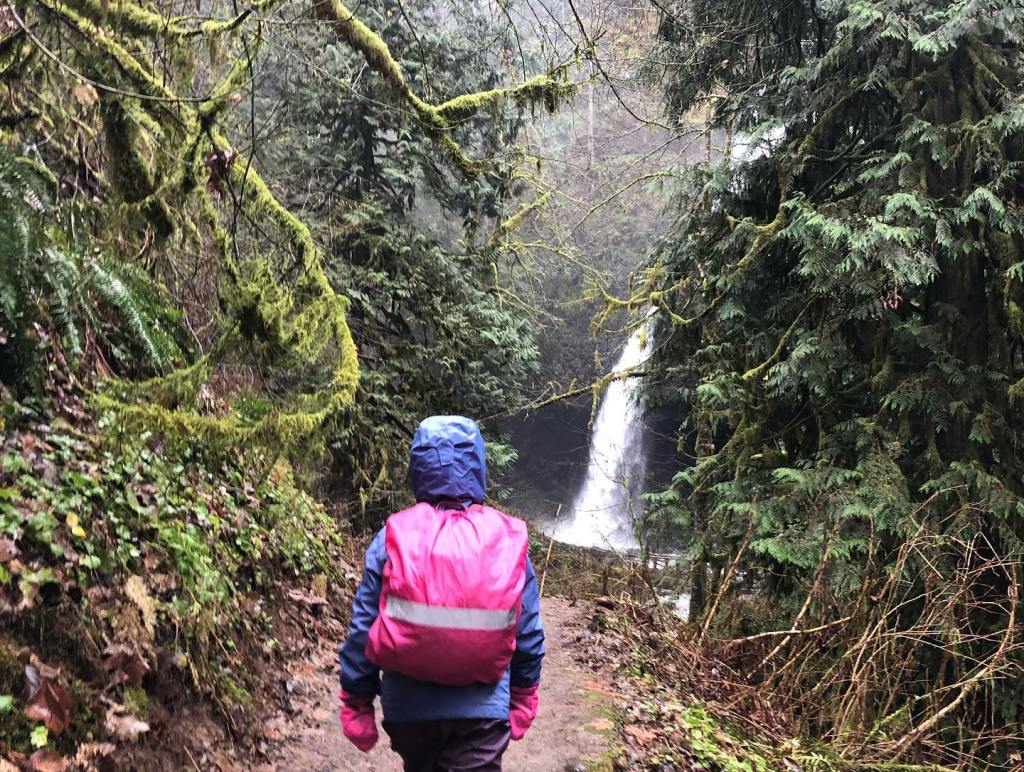
We love this hike because you can hike right up to two waterfalls on a somewhat challenging 2.4 mile loop hike. This hike is a Gorge treasure and is appropriate for kids who can navigate steep trails that are slippery when wet and are narrow with drop-offs. There are great Gorge views as well as fun trees to climb on and walk through. Be prepared for the cold sensations of waterfall spray as you make your way around the loop. The trail can get muddy, so use caution near cliff edges. This is one of the few hikes on the Oregon side of the Western Gorge that has not been affected by the 2017 Eagle Creek Fire. Fire-stricken areas are prone to dangerous mudslides during times of heavy rain, ice, and snow. That said, you still need to pay attention to recent weather events, as they can still destabilize any of the slopes in the Gorge.

Hike 38 in little feet hiking: Columbia River Gorge: Rowena Plateau
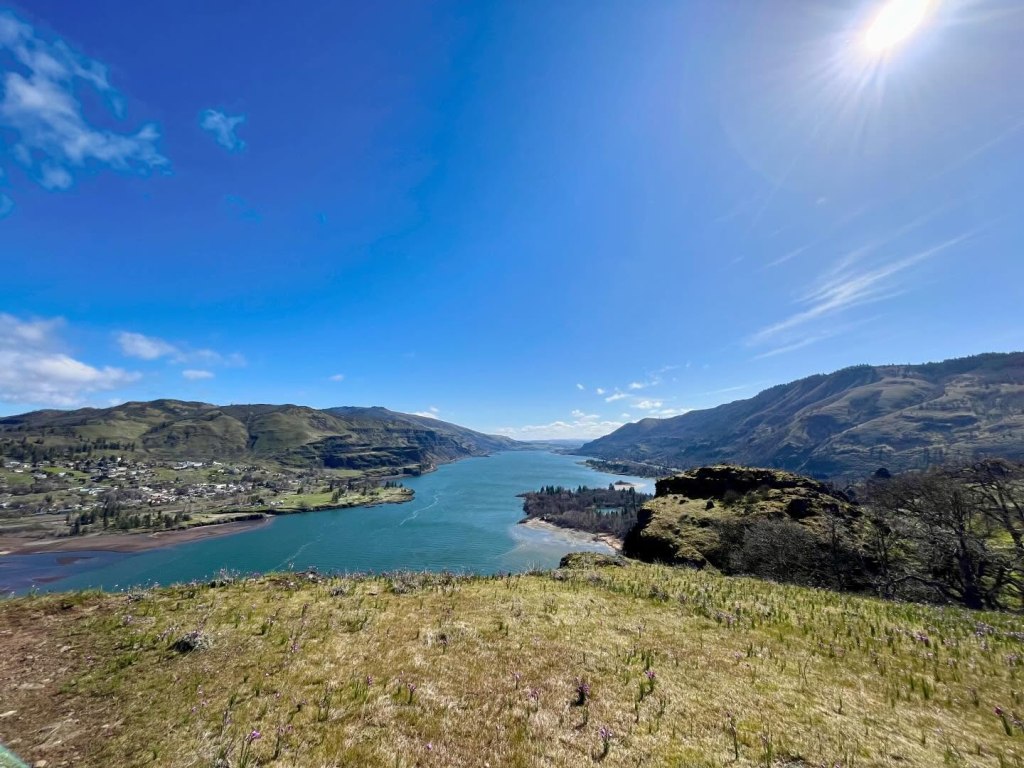
This hike is one of the best in the eastern Gorge for late winter wildflowers. This nature preserve has amazing Gorge views and reliably has purple and white grass widows blooming in late February. In general, the area sees more sunshine in winter due to the rain shadow effect, making its a great destination for the winter blues. Just remember to check the latest forecasts, as the Gorge is prone to ice storms and low-elevation snow during the winter. Please respect this Nature Conservancy property by keeping your pets at home, staying on the trail, not picking the flowers, and using the boot brush at the beginning of the hike. As always when hiking in this part of the Gorge, keep an eye out for poison oak and ticks.


little feet hiking: Portland Metro

Hike 1 in little feet hiking: Portland Metro: Central Forest Park Loop

Most people know about amazing Forest Park, but it is hard to know where in the park to hike with kids. This fun loop takes you through a less-crowded section of Forest Park. On your hike, you’ll encounter pretty forest and lots of muddy track traps to help you track any wild animals that may have traversed the trail earlier. Read more about animal track and track traps in my book.

Hike 32 in little feet hiking: Portland Metro: Hopkins Demonstration Forest

Hopkins Demonstration Forest is a lovely 140-acre privately owned forest near Beavercreek that is open to the public for hiking. There is a variety of trails here that take you past a pond, a creek, a log house, a fire lookout, and more. There are also interpretive features that teach out about the various habitats onsite. I like this property in the winter because there is so much green by way of fir needles, ferns, and other evergreen plants. There isn’t great cell service here, so make sure you know the way before leaving town.

Hike 44 in little feet hiking: Portland Metro: Cooper Mountain Nature Park

This Metro park is a fantastic place to hike in winter. You’ll often encounter deer amongst the oak savannah and ponderosa pines, and there are interpretive signs along the trail. On a sunny day, you can even spy a view of Mt. Hood. You can hike up to 3.2 miles, and there are some hills to get your blood pumping. Leave some time at the end of your hike to play on the nature playground. No dogs are allowed at this park.

Getting Kids Outside as School Starts Back Up

September hits and so does school, homework, soccer practice, after-school activities, social engagements, etc. That is an abrupt change to spending our days swimming, camping, hiking, riding bikes, and going to outdoor festivals. It has always been hard for me to make this change, especially because fall is so lovely in the Pacific NW. The rain doesn’t really hit hard until sometime in the middle of November, which means we have several months of ideal weather. So, why spend it all inside?

Getting outside with our kids once school starts up is certainly a challenge. It is important, though. Studies show that getting outside helps our kids’ mental and physical health. It can also help kids while they are at school by reducing stress, improving focus, and more. Add in some screen-free family connection, and there are endless benefits. 

The nice thing about getting outside with kids is that it doesn’t need to be Instagram-worthy (and I would argue that we need to normalize local, low-key outdoor activities with our kids)! Any amount of time or location outdoors WILL be beneficial. You’ve got 15 minutes? Get outside! You can certainly fit that in most days.

Here are a few ideas for getting kids outside once the school year kids off:

Whatever you do, have fun with your kids outside!

Safety and Gear Ideas for Hiking Families

With so many families out hiking, I wanted to post my book’s safety tips so that everyone can see them. While this post does not address everything you need to know about safely hiking with kids, I hope it gets you started.

SAFETY IDEAS:

Below are my most important safety recommendations to prepare for a hike:

  • ALWAYS, ALWAYS, ALWAYS tell someone where you are going, when you will be back, and if you can, tell them what authorities to contact if you do not check in by the time you say you will. I usually assume one mile per hour and often add an hour or two in case I decide to stay a little longer on the trail or make a stop on the way home. 
  • Try not to hike alone if you are outside of cell service range. 
  • Respect fire closures! More is written on this below. 
  • Give your kiddo a backpack with gear or at the very least, a whistle with a lanyard that goes around the neck. Talk to them about what to do if they get lost (more on this later in this section).
  • Pay attention to how far in you have hiked and be prepared to carry your kiddo back if you hike in too far or someone gets injured
  • Know what time the sun sets
  • Check trailhead, road, and snow conditions 
  • Read up on how to hike in ice and snow: https://talesofamountainmama.com/winter-hiking-for-beginners
  • Keep yourself and your kiddo dry, fed, and hydrated
  • Know what the weather is supposed to be for the next few days and plan for inclement weather (it changes quickly in the Pacific Northwest); visit www.weather.gov and type in the closest town to your hike and then click on your hike location to get the most accurate weather information
  • Know your route to the trailhead, including alternate routes and check conditions before you leave, including 48-hour weather forecasts
  • Know where to find the closest gas station to the trail and what cell service is like
  • Pre-read the hike descriptions so you know what to expect.
  • Bring as many of the 10 essentials for you and your kids as you can and know how to use them in an emergency (I write more about this below).

In addition to the above tips, here are my suggestions on how to stay safe while on the trail. 

The big things parents can advise kids on are:

  • Not to put anything in their mouths except for food you have given them
  • Not to run ahead out of sight
  • Stop at all trail junctions (where two or more trails come together)
  • Walk slowly and mindfully when conditions are steep, rocky, downhill, or wet
  • Stay on the side of the trail away from cliffs and look in the direction they want to hike
  • Do not run, jump, skip, or hop near ledges or on rocky trails

I advise parents to:

  • Be prepared and consider possible hiccups
  • Carry a quality first aid kit and know basic first aid skills; consider carrying an emergency locator beacon
  • Know your and your kids’ abilities (and how far you can push them)
  • Be willing to turn around
  • Go with others (which saved me on the day I sprained my ankle a half mile from the trailhead on Mt. St. Helens!)
  • Stop at all trail junctions to orient and review maps and hike descriptions before proceeding; you can involve kids in this early on so this becomes a habit
  • Point out toxic plants and advise on consequences if appropriate
  • Remember that temperatures will be cooler at higher elevations

Rivers and Lakes:

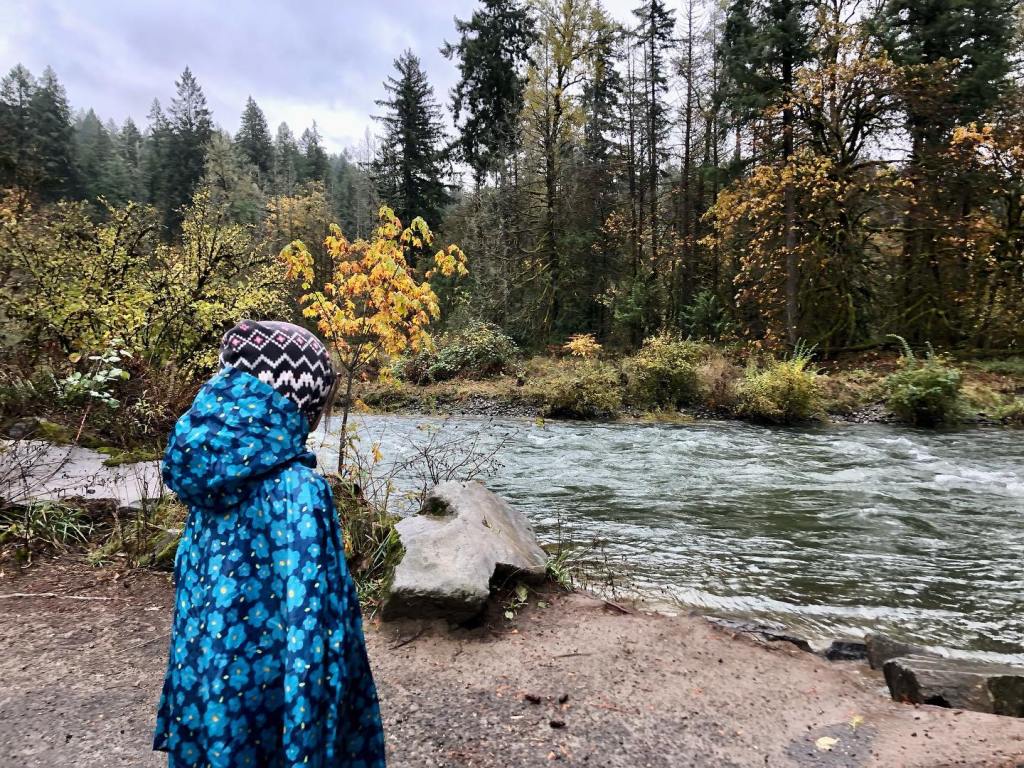
It is important to know that the rivers and creeks in the PNW are swift and cold, and the lakes range from cold to warm depending on the time of year. There are usually no lifeguards and extra care needs to be taken near water, especially around fast-moving rivers and creeks.

Insects:

You will encounter different insects depending on when you visit the areas in the PNW. In general, mosquitoes seem to be less of a problem near rivers, but you should always be prepared to encounter them, especially if hiking near still water. In late summer, you may encounter stinging insects like wasps and hornets. Use caution around the bases of trees and keep an eye out for nests and an ear out for buzzing. You may encounter ticks, especially east of the Cascade Locks area. I have encountered them west of Cascade Locks. It’s always good to do a tick check after every hike, but especially in the spring and year-round hiking east of Cascade Locks. It is a quick and easy habit to prevent having to remove one later. You can learn more here: https://americanhiking.org/resources/ticks

Toxic Plants:

There are many plants in the woods that are toxic. However, once you start looking into it, most of the plants in your yard are as well (like rhododendrons and rhubarb leaves)! Poison hemlock, many mushrooms, chokecherry, baneberry, and nightshade are some deadly plants you should know about. These plants are not too prevalent, but they do occur in Pacific Northwest forests. I recommend familiarizing yourself with these and other toxic plants. Many plants have colorful berries in late summer and if ingested, will make kids ill but are not necessarily deadly. I have a “no picking of berries” rule. There are some wonderful edible wild berries, but I have instructed my kiddo to point out the berries, ask if they are edible, and then I advise from there. We also have a “no touch” policy on mushrooms. 

Dogs:

When meeting dogs on the trail, I have kiddos step off the trail and wait for dogs to pass. Kids should only approach dogs after asking you and the owner if it is okay. Kids should stand above dogs and not kneel down at eye level.

Wild Animals:

You probably know that there are wild animals in the woods (cougars, bears, coyotes, deer and elk, oh my!). Attacks by wild animals are rare in Oregon and Washington, but if you are on a trail where you might encounter these animals, make sure you do not hike alone with your child, make noise, and avoid trails early in the morning and at dusk. This is another reason not to let kiddos run ahead on sparsely populated trails. You can mitigate this by having more than one adult who can take the lead while another adult acts as a caboose. Read up on what to do if you encounter a variety of wildlife here: www.dfw.state.or.us/wildlife/living_with and consider carrying bear spray, whistles, and hiking poles to help scare away an animal. 

Lost Kids: 

While uncomfortable to discuss, getting lost can happen. Your entire family can avoid getting lost by staying on the trail, carrying a map, and stopping at all trail junctions to confirm that you are where you think you are. Include children in checking maps and identifying your location.

It is important to talk to kids at home and at the beginning of the hike on how to avoid getting lost and what to do if they get lost. Strategies for preventing a lost child include:

  • Not letting kids run ahead out of sight (tell them they have to stay close enough to see an adult)
  • Not letting kids leave the trail without an adult
  • Giving kids a whistle that hangs from a lanyard
  • Dressing kids in bright clothing
  • Discussing the importance of stopp

You can also prepare them for being lost by teaching them the following: 

  • Only blow your whistle if you need help (instead of for play)
  • If you get lost, hug a tree, stay put, and call out or blow your whistle 3 times in a row every few minutes. 
  • It is much easier to find someone who is lost if the only people moving are the searchers
  • How to use what is in their pack and even practice at home

If your kids get lost, you can aid in their recovery by giving them a backpack to wear with extra food, water, and clothing, a small first aid kit, a flashlight, a large garbage bag or poncho (for raincover) and a notecard with emergency contact information.

It can be scary for kids to talk about getting lost, but discussing how to avoid getting lost and what to do if you get lost is very empowering for kids. Check out this website: https://westvalleysar.org/wilderness-safety/hug-a-tree. Don’t be scared, be prepared!!

GEAR IDEAS:

It is best to plan for “a day hike gone bad,” especially if you will be on a trail without cell service or one that is far away from resources. 

When leaving for a hike, I don’t leave the house without:

  • The 10 Essentials (see below)
  • Personal Locator Beacon and Garmin Inreach
  • Physical road map (because cell service is not always available and mapping services are not always reliable)
  • Bear Spray
  • Change of clothes and extra socks
  • Food and water for the trip home

So what are the 10 Essentials and why do people talk about them so much? The 10 Essentials are the top ten things you should need to survive a night out in the woods. They are:

  • Navigation – map, GPS, compass
  • Light – headlamp or flashlight with extra batteries
  • Sun protection – sunglasses, sunscreen, sun-protective clothing like a hat
  • First aid kit (make sure to include insect repellant and children’s medications)
  • Knife or multi-tool
  • Fire – matches, lighter, magnesium/flint
  • Shelter – tarp, emergency blanket
  • Extra food – bring more than you need and consider lightweight high-calorie protein bars
  • Extra water – bring more than you need and consider carrying water purification tablets and/or water filter or lifestraw
  • Extra clothes – for warmth, bring a hat and a warmer layer; I pack my bag for overnight temperatures

You can learn a lot more here: https://americanhiking.org/resources/10essentials.

Regarding clothing, I dress kiddo in bright colors so I can keep a better eye on her amongst the colors of the forest. Remember that “cotton kills” in our climate during the rainy months (check this site out for more information: https://sectionhiker.com/why-does-cotton-kill). For a typical November day, I layer my kiddo with synthetic base layers (long underwear), fleece pants, fleece pullover and then a waterproof trail suit or rain jacket and rain pants. Wool is a natural alternative to fleece if you are not sensitive to it like me. You will need to keep an eye on whether your kiddo is sweating and de-layer before that happens (check in after climbing a bit or if you feel yourself getting too warm). Getting wet is a no-no in winter here (see the link above about cotton). These rules apply to socks too. When temperatures are warmer, I tend to stick with wicking clothing for quick drying if kiddo sweats or plays in water. Remember that warm days can still have cool mornings and evenings so always bring warmer layers when hiking in the mountains. Check out this link for good ideas: https://raisinghikers.com/how-to-dress-kids-for-winter-hikes/.

Sun protection is also super important all year long due to the angle of the sun in our Oregon sky. Sturdy well-fitting shoes with good traction are important but dedicated hiking shoes can assist when trails are wobbly or rocky. Bring a pair of kids sandals if you think they might want to play in boggy lakes.

If you can, get your kiddos their own backpacks and water bottles/bladders. This will make hiking even more exciting! Have your kiddos carry their own snacks, water, and layers, but make sure not to weigh them down with too much gear. Experts disagree, but a good rule of thumb is that kids over 4 years old can carry 5-15% of their body weight. Remember to account for the weight of water and the pack itself. For younger kids, you can just let them wear their backpacks with nothing in it to get them used to it.

A single toy or doll to accompany your kiddo on the hike can always be a fun motivator and source of comfort. Bring extra clothes, snacks, and water for the ride home. A travel potty, extra socks,towels, and wet wipes for wiping off trail dirt are always a great idea. You may want to bring a backup kid carrier on your hike if you think you might need to carry your kiddo out. 

12 Runner-Up Playground Hikes within 50 miles of the Portland and Vancouver (WA) Metro Areas

Have you ever hiked with a kid who just didn’t want to hike? It happens. In my five hiking guides, I give you a lot of general and hike-specific ideas to motivate your kids to keep hiking. However, after 10 years of hiking with kids of all ages, the most tried-and-true motivator that I’ve found (other than ice cream) is PLAYGROUNDS!

North Bonneville Park

After going through all 5 of my kids hiking guides, I’ve identified 22 hikes, within 50 miles of Portland (Oregon) and Vancouver (Washington), that have playgrounds along the trail, at the trailhead, or within a few miles of the trailhead. Better yet, my 10 year old (the original littlefoot) sat down with me to rank the top 10 playgrounds in her opinion (she has visited all of them). You can find that post here. Below you will find the remaining 12 playground hikes!

12 MORE PLAYGROUNDS (AND THEIR HIKES)

Tickle Creek

  • 1.6 to 3.2 miles round trip
  • Shallow creeks
  • Paved or gravel, stroller-friendly trails
  • 29 miles from downtown Portland and 32 miles from downtown Vancouver
  • Learn more in little feet hiking: Portland Metro
Creek along the trail
Playground along the trail

Mt. Tabor

  • Up to 3 miles round trip
  • Hike atop an extinct volcano
  • Paved stroller-friendly trails with some hills
  • Flush toilets available
  • 4 miles from downtown Portland and 11 miles from downtown Vancouver
  • Learn more in little feet hiking: Portland Metro
View of Portland from Mt. Tabor
Photo of playground: Foursquare

Cooper Mountain Nature Park

  • 0.7 or 2.9 miles round trip
  • Hike through meadows and look for wildlife like deer, frogs, and birds
  • Nature-themed playground
  • Gravel trails that are stroller-friendly if you don’t mind hills (the 0.7 mile loop is less hilly)
  • Flush toilets available
  • 13 miles from downtown Portland and 21 miles from downtown Vancouver
  • Learn more in little feet hiking: Portland Metro
View of one of the many meadows along the trail
Nature-themed playground

Oxbow Regional Park

  • 2 to 4.1 miles round trip
  • Hike through old-growth forest and along the Sandy River (use caution near the river)
  • Two available playgrounds: a more traditional playground and an inclusive nature-themed playground
  • Flush toilets available
  • 25 miles from downtown Portland and 28 miles from downtown Vancouver
  • Learn more in little feet hiking: Portland Metro
Beach along the Sandy River
Photo of nature playground: Learning Landscapes

Lower Marble Creek Falls

  • 1 mile round trip
  • Hike alongside a lake (reservoir) to a small waterfall
  • Flush toilets available
  • 46 miles from downtown Portland and 35 miles from downtown Vancouver
  • Learn more in little feet hiking two
Beach along the lake
Onsite playground

Battle Ground Lake

  • 1 or 2 miles round trip
  • Hike alongside a volcanic lake and through lovely forest
  • Flush toilets available
  • 29 miles from downtown Portland and 20 miles from downtown Vancouver
  • Learn more in little feet hiking two
Hiking around the lake
Playground near the trailhead

Pool of the Winds

  • 3 miles round trip
  • Hike uphill to a beautiful waterfall through forest past Bonneville Dam views
  • Flush toilets available
  • 41 miles from downtown Portland and 35 miles from downtown Vancouver
  • Learn more in little feet hiking: Columbia River Gorge
View of the waterfall turnaround
Fun playground at the trailhead

Hamilton Island

  • 3 miles round trip
  • Hike past Gorge views, through meadows, and along the Columbia River
  • Vault toilet available at the trailhead
  • See if you can find all the Bigfeet at the Bigfoot-inspired North Bonneville Park playground located 3 miles from the trailhead
  • 46 miles from downtown Portland and 40 miles from downtown Vancouver
  • Learn more in little feet hiking: Columbia River Gorge
Gorge views from the trail
Bigfoot family near the playground

Campen Creek Greenway

Hiking through meadows
Photo of playground: Play Creation

Oaks Bottom

  • 2.7 or 2.8 miles round trip
  • Hike through an urban wildlife refuge
  • Playground and flush toilets available at adjacent Sellwood Park
  • 5 miles from downtown Portland and 13 miles from downtown Vancouver
  • Learn more in little feet hiking: Portland Metro
Looking for wildlife from the trail
Playground at Sellwood Park

Iron Mountain

  • 1.8 miles round trip
  • Hike up hills to the site of a historic iron mine
  • Flush toilets available
  • 9 miles from downtown Portland and 18 miles from downtown Vancouver
  • Learn more in little feet hiking: Portland Metro
Viewpoint from the trail
Nature-inspired playground at the trailhead

Ridgefield National Wildlife Refuge

Plankhouse replica located along the trail

Which playground, I mean hike, will you choose first??