Have you ever hiked with a kid who just didn’t want to hike? It happens. In my five hiking guides, I give you a lot of general and hike-specific ideas to motivate your kids to keep hiking. However, after 10 years of hiking with kids of all ages, the most tried-and-true motivator that I’ve found (other than ice cream) is PLAYGROUNDS!
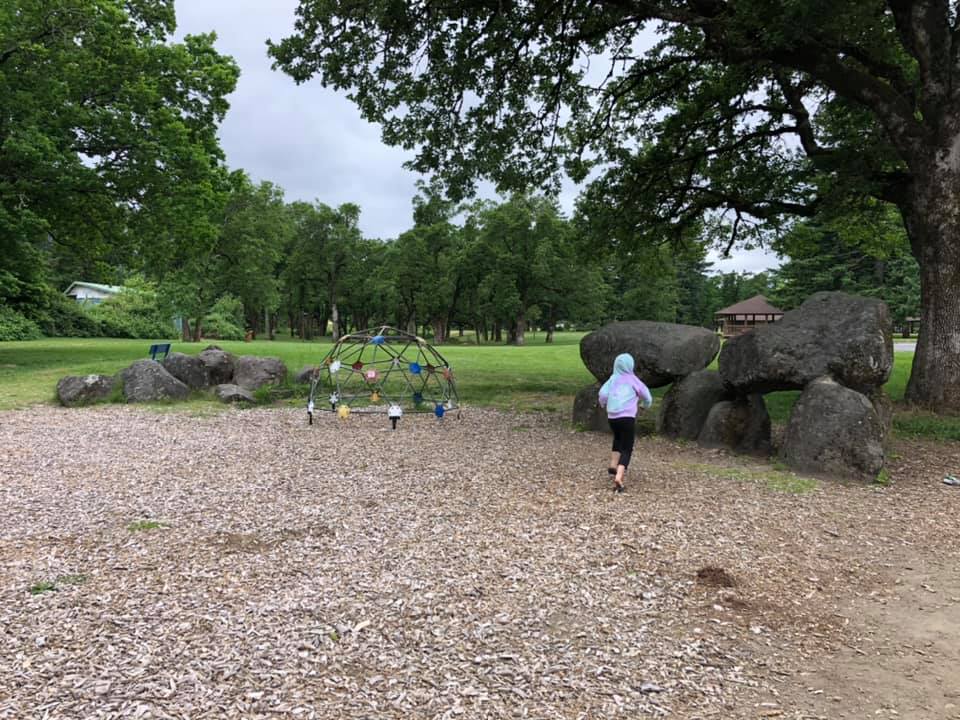
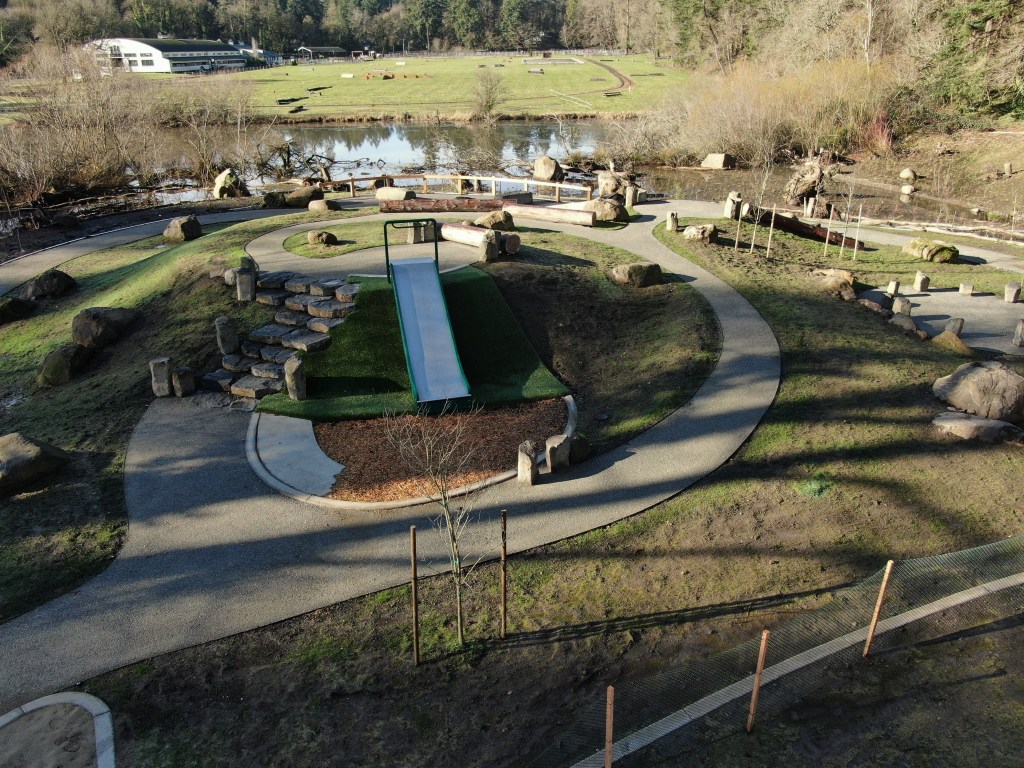
North Bonneville Park
After going through all 5 of my kids hiking guides, I’ve identified 22 hikes, within 50 miles of Portland (Oregon) and Vancouver (Washington), that have playgrounds along the trail, at the trailhead, or within a few miles of the trailhead. Better yet, my 10 year old (the original littlefoot) sat down with me to rank the top 10 playgrounds in her opinion (she has visited all of them).You can find that post here. Below you will find the remaining 12 playground hikes!
12 MORE PLAYGROUNDS (AND THEIR HIKES)
Tickle Creek
1.6 to 3.2 miles round trip
Shallow creeks
Paved or gravel, stroller-friendly trails
29 miles from downtown Portland and 32 miles from downtown Vancouver
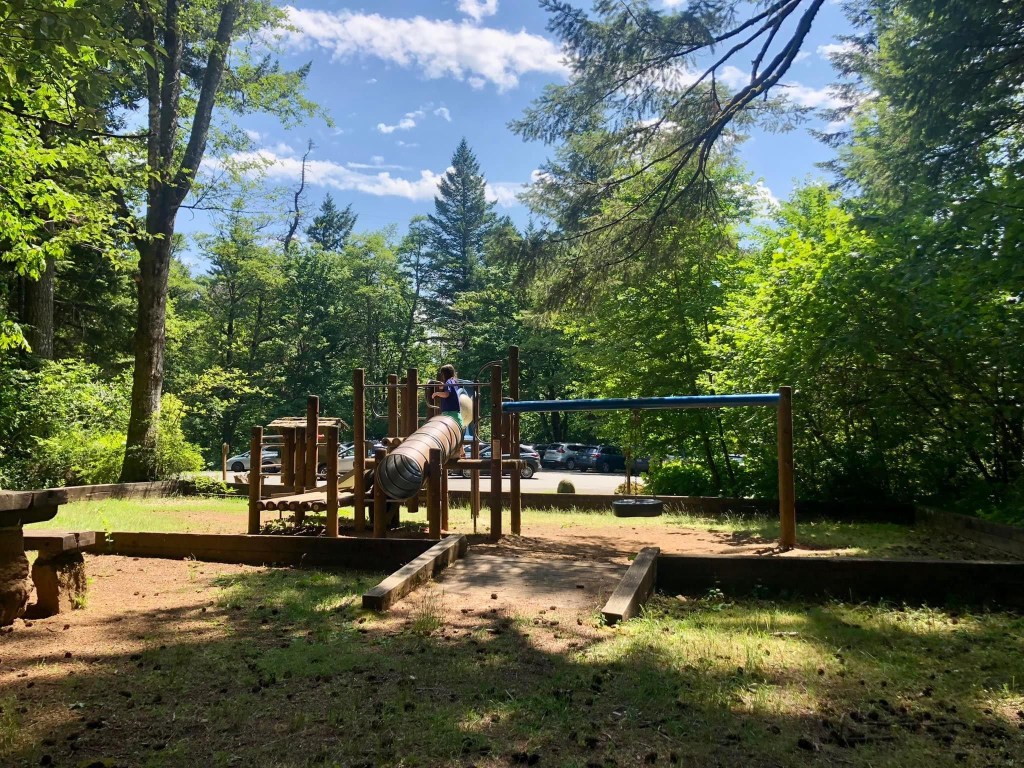
Bells Mountain Trail from Cold Creek Day Use Area, “little feet hiking”
The heat is here and people will be flocking to our local waterways. In addition to being crowded, our waterways aren’t the safest places during the rapid snowmelt that comes with our first few heat waves of the year. The water can be cold and fast-moving, and many places do not have lifeguards available. So how do you keep your kids active during a heat wave? The awesome thing about our area is that we have so many amazing forests that can keep us cool on the hottest days. Did you know that shady forests can keep us cool through what is known as the process of evapotranspiration?? While forests can help keep you cool, you will still need to take it easy and keep an eye out for signs of heat exhaustion or stroke. Hitting the trail in the morning and bringing along extra water and sun protection is helpful too.
Below are some suggestions of hikes that should be shady, less-crowded, and keep you away from the big bodies of water. If you are going near any body of water, it is good to brush up on your water safety skills and assess the risks for your entire family before enjoying any water. Even small creeks can present issues for certain kids. Be safe, and access water on the following hikes at your own risk.
Have you ever hiked with a kid who just didn’t want to hike? It happens. In my five hiking guides, I give you a lot of general and hike-specific ideas to motivate your kids to keep hiking. However, after 10 years of hiking with kids of all ages, the most tried-and-true motivator that I’ve found (other than ice cream) is PLAYGROUNDS!
I have gone through all five of my books, and I’ve identified 22 hikes, within 50 miles of Portland (Oregon) and Vancouver (Washington), that have playgrounds along the trail, at the trailhead, or within a few miles of the trailhead. Better yet, my 10 year old (the original littlefoot) sat down with me to rank the top 10 playgrounds in her opinion (she has visited all of them).
Below, you will find these top 10. Click here for the remaining 12!
TOP 10 PLAYGROUNDS (AND THEIR HIKES) ACCORDING TO LITTLEFOOT
Spring is such a mixed bag around here. In a given year, we can have snow, ice, rain, hail, and sunshine. Spring in the PNW means wildflowers are popping up everywhere, the waterways are full, and temperatures are (should be??) warming up.
Looking for migratory birds at Ridgefield National Wildlife Refuge
It can be hard to know where to hike in the spring since the weather is constantly changing and snow levels are still quite low. Urban trails, as well as the local national wildlife refuges are usually a good bet with their low elevation and migratory bird excitement. Hikes in the Gorge, as well as most hikes below 2,000 feet are a good bet in spring.
Admiring Latourell Falls in the Columbia River Gorge
While I can’t fully prepare you for spring hiking, below are a few tips on how to hike with your kids in spring:
Plan for quickly changing weather. Check the weather the morning of your hike, but make sure you have extra layers for rain, wind, or hail.
Dress in layers and avoid cotton. The combination of cool spring temperatures and rain can still put you in hypothermia territory.
If you are going up into the area’s national forests, check conditions on trailhead pages (included in book descriptions), as well as here for the Gifford Pinchot National Forest and here for the Mt. Hood National Forest
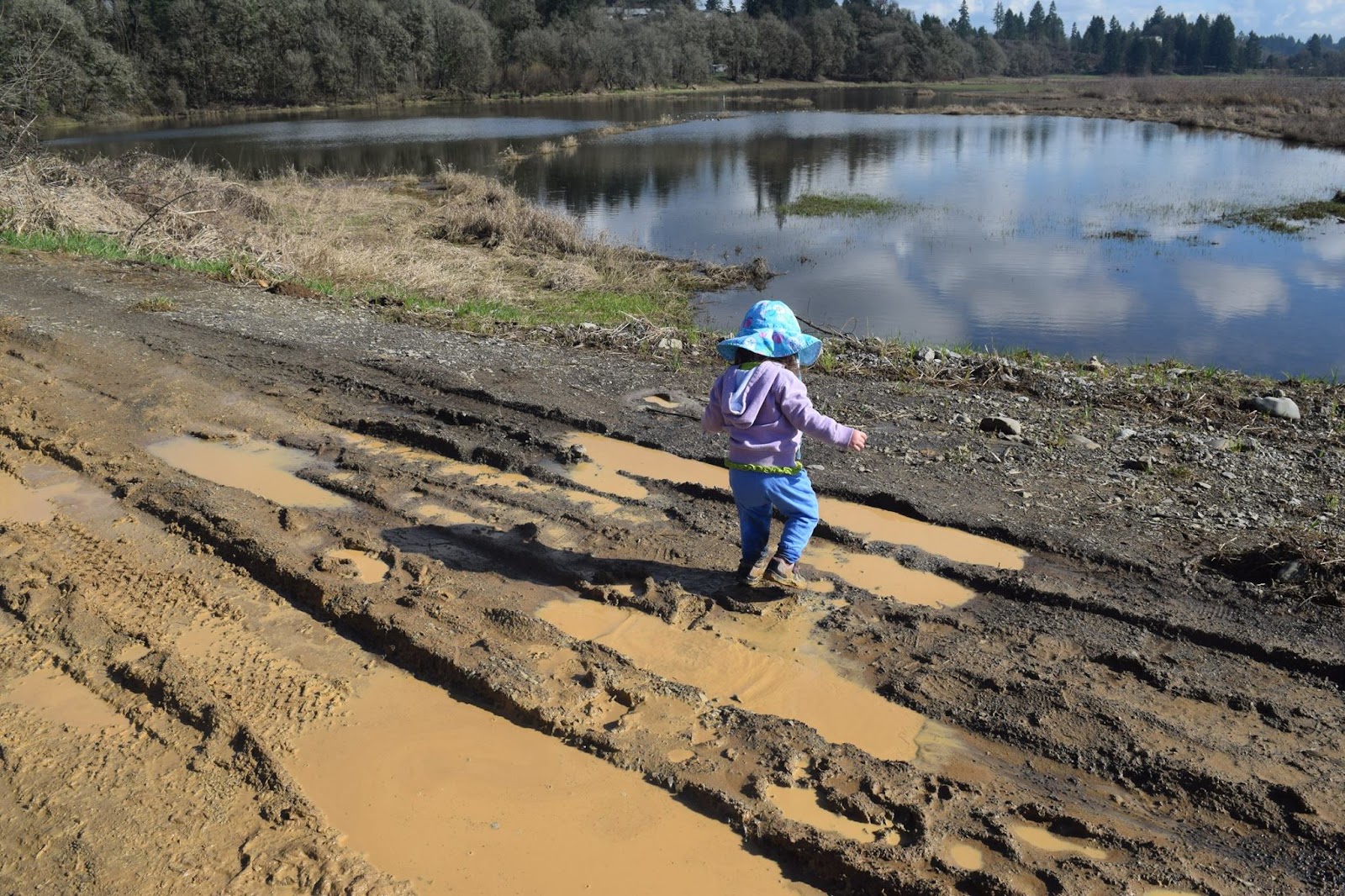
Assume you will encounter mud and bring a change of clothes for kiddos!
Make sure you do a tick check after your hike and watch out for poison oak, especially when hiking through oak woodlands and east of the Cascades. Learn about how to hike in tick country.
Check out these great spring hiking tips from the Washington Trails Association.
Consider an after-dinner hike as sunset gets later.
Checking out the Willamette River at Canemah Bluff
Now that you know how to hike in spring, how do you know where to hike with your family? No worries, I’ve got you covered. I’ve compiled my favorite spring hikes by book. Check them out below.
For springtime kid-friendly hikes in the Portland area, visit this page.
For springtime kid-friendly hikes in the Mt. St. Helens, Southwest Washington, Vancouver, and Clark County areas, visit this page.
For springtime kid-friendly hikes in the Columbia River Gorge, visit this page.
For springtime kid-friendly hikes in the Mt. Hood area, stay tuned for a future post.
Curious where to hike with your kids this spring in the Vancouver, Clark County, and Southwest Washington Areas? Look no further because I’ve written two kids hiking guides covering 55 hikes in the area. While some of these hikes will be covered in snow for a few more months, there are so many other hikes that are accessible and lovely in spring.
I’ve picked the must-do spring hikes from my books little feet hiking and little feet hiking two. You can get all the details you need for a safe and fun family hike by picking up a copy and hitting the trail.
There are many more excellent springtime hikes in the area. For Portland area spring hikes with kids, check out this post. For Columbia River Gorge area spring hikes with kids, check out this post.
Fall is personally my favorite season in the Pacific Northwest. The snow level tends to hang high enough into early October to still get up into the mountains, and the mushrooms and changing leaves can be so colorful. We also get to enjoy less-rainy outdoors adventures with less heat and less smoke. My favorite part, however, is all the opportunities to see salmon spawning. Of the 20 hikes in this post, 6 take you to places to watch the salmon!
October is the perfect time to hike in costume
My amazingly supportive followers have asked for fall hiking recommendations, so I’ve outlined my favorite fall hikes by book title. Check them out! If you’d like to subscribe to my quarterly email newsletter for more tips and news, sign up here.
I love this hike for the falling heart-shaped cottonwood leaves and the chance to see birds preparing for winter. Leaves start changing colors in mid-October and are usually off the trees by mid-November. This hike is appropriate for new hikers through adults.
Lucia Falls is a year-round favorite for our family, but we especially love it in October for the salmon run. Check out this video and this post to see salmon jumping there in October. Along this short hike, you will also see lovely changing falls colors and neat mushrooms. Consider visiting on a weekend in October so you can check out Pomeroy Farm’s Pumpkin Lane after your hike. This hike is appropriate for all ages, although littles will need help staying away from the rocks and walking through the parking lot.
The forest at Whipple Creek Regional Park is such an urban oasis for the area. The forest is beautiful year-round, but especially mid-October to mid-November when the big-leaf maple tree leaves fall. The trail itself is okay for all ages, but littles will need help if you encounter horses.
The Whistle Punk trail is located in the Gifford Pinchot National Forest near Carson, so it requires a little bit of a drive. However, the drive through the Gorge and into the forest is quite lovely, and this trail also features some neat historical equipment interspersed throughout the forest. Consider tacking on a trip to the Bonneville Fish Hatchery to see adult fall Chinook and coho salmon spawning. This trail is appropriate for all ages.
This hike takes you to subalpine meadows with a lovely lake. Late September and early October are the best time to hike if you want to see changing fall colors and colorful mushrooms (look, don’t touch!). Keep an eye on changing snow levels as the trailhead is located at 4,100 feet. This trail is appropriate for all ages.
Battle Ground Lake State Park is a busy place in summer, so I like to visit in the fall when leaves are changing and crowds are down. Hiking around the lake also provides an opportunity for some place-based learning. You can learn about the volcanic origins of this lake in my second hiking book. Littles may find this trail challenging at times due to rocks on the trail – and then there is the lake:)
This short, flat hike is another place where place-based learning can occur. This hike not only has tons of historical connections, but you also get some neat views of Bonneville Dam. Consider hiking this trail in November for fall colors and to honor Native American Heritage Month. Along the trail, you will find signposts that correlate with an online brochure detailing what each signpost. Unfortunately, much of the information you will find about this trail focuses on the western settlers and how they built forts to protect the portage from the people who once lived here. Before this land was taken in the 1850’s, the Fort Cascades Loop Trail was occupied by members of the Watlala and Cowlitz tribes. Before or after your hike, educate your kids on the people who lived here before it was taken. While this trail works for all ages, littles will need help staying off the historical equipment.
October is a fantastic time to hike the Ape Cave surface trail. The vine maple leaves are changing to a vibrant red, fun mushrooms start popping up in the forest, and you can hike along the trail through the lava fields without getting overheated. You can also explore the cave with smaller crowds (I recommend the lower cave for kids). Timed parking reservations are still required. I would avoid this with littles because it is easy to get scraped up on the lava field or fall in hole.
Barlow Wayside is a lovely place to see changing fall colors, but it is also known as a great place to watch spawning salmon late September to early December.. You can learn all about where to look for the salmon in my Mt. Hood hiking guide. Unfortunately, the area is currently closed due to the nearby Camp Creek fire, but fingers crossed that the area opens back up soon. Look for updates here. This hike is appropriate for all ages, but you will want to keep littles out of the creek to protect the salmon.
The Wildwood Recreation Site in Welches is such a neat place. If you visit in the fall, you will definitely see changing falls colors, but you are also likely to meet some small fry at the fish viewing window and see salmon spawning in the Salmon River from late August through November. This hike is great for all ages.
Lookout Mountain is one of my favorite hikes around. In addition to volcano views of Mt. Hood, Mt. Rainier, Mt. Adams, Mt. Jefferson, and Mt. St. Helens, we got to see western larch trees up close on the drive to the trailhead, and also in the distance from the top of the mountain. These deciduous conifers only grow on the east slopes of our PNW mountains and the needles change to a golden yellow starting mid-October before dropping off completely. Be sure to visit this one in early to mid-October before snow closes the road. This hike is best for older kids who can handle trails with steep drop-offs.
Lost Lake is a family favorite for fall hiking and camping (open through mid-October). The lake trail is flat and offers excellent views of Mt. Hood and changing fall colors. You can even rent boats on-site through the middle of October. This hike is appropriate for all ages, but littles will need help staying out of the lake and crossing campground roads.
One of the best places in the area to see salmon spawning is in Eagle Creek by the Cascade Salmon Hatchery. I don’t think the infamous Eagle Creek trail is safe for most kids, but I’ve crafted a more kid-friendly hike starting at this trailhead and passing one of my favorite salmon spawning viewing spots. The best time to see salmon spawning here is late-September to mid-October. This hike is okay for all ages but littles will need help staying out of the creek, walking through the parking lot, getting to the bottom of the waterfall, and not falling over the bridge above the waterfall.
The hike to Pool of the Winds is one of my favorite trails, but it can be hard to hike in the summer due to its popularity. As we move into October and November, the trails should be less busy and it should be easier to find a parking spot so you can get those amazing Hamilton Mountain and waterfall views. This hike’s elevation gain can be challenging on little legs and there are some drop-offs, so I recommend for sure-footed preschool-age and older kids.
I love the Columbia River Highway Trail heading west from Starvation Creek State Park because of its lovely waterfalls and it’s accessibility. The trail is paved, making it okay for strollers and even bicycles. As we move into the rainy season, the waterfalls will get fuller and colorful leaves will drop to the ground. It can be quite noisy due to the interstate, FYI. This hike is appropriate for all ages.
On the west side of the Columbia River Gorge, most of the leaves we see changing and falling come from big-leaf maple trees. On the east side, the most dominant deciduous tree is the mighty white oak tree. While hiking along the Catherine Creek trail in October and November, you’ll be struck by the contrast of the brown/orange oak leaves against the blue sky (because it is sunnier there than it is on the west side). This hike is best for older hikers due to elevation gain, drop-offs, and rattlesnakes (stay on the trail and you most likely won’t encounter them).
This trail on Sauvie Island is excellent in fall. On a typical hike in fall, you should see birds, caterpillars, frog, snakes, and maybe even some deer or crickets. If you visit in October, I highly recommend following your hike up with a trip to one of the island’s wonderful pumpkin patches. This hike is okay for all ages, but littles will need help near water.
You don’t hear much about the hike around Reed Lake, but its an absolutely lovely place for a hike and nature connection. My favorite part of hiking here is the opportunity to see wildlife up close. The City of Portland and Reed College have been working tirelessly over the years to restore Reed Lake and Crystal Springs Creek to its former, healthier self. Because of this, last October (while scouting for the Portland book), my daughter and I watched an otter eat a fish in the lake. 3 miles from downtown Portland! I can’t guarantee an otter sighting, but as this area gets healthier and more salmon return to the area in fall, your chances get better every year. Learn more about the restoration work and the hike itself in my Portland book. This hike is okay for all ages, but littles will need help near water and when walking on the road.
Oxbow Regional Park is known for its fall salmon viewing, as well as its beautiful forest. My books outlines several hikes you can do, but this brochure is the best for understanding the annual salmon run. When you visit, be sure to leave enough time for kids to play on Oxbow’s two playgrounds. This hike is okay for all ages, but littles will need help with road crossings and staying out of the rushing and dangerous Sandy River.
Hoyt Arboretum is one of the best places in the area to check out the changing seasons, especially the change from summer to fall. The arboretum’s massive deciduous tree selection is sure to put on a great show every October and November. Check out the website for seasonal activities and little feet hiking: Portland Metro for several kid-friendly loops through these changing trees. This hike is great for all ages.
This summer, I am leading three hikes in partnership with the Fort Vancouver Library System. All three hikes are free and are in different parts of the Clark and Skamania Counties. Hikes require registration – check out the links below. Also, learn more about the partnership here!
Originally posted on PDXParent.com on August 8th, 2022
Hiking with toddlers is a ton of fun … and also an exercise in patience. These hikes make it easier.
Credit: Jessica Becker
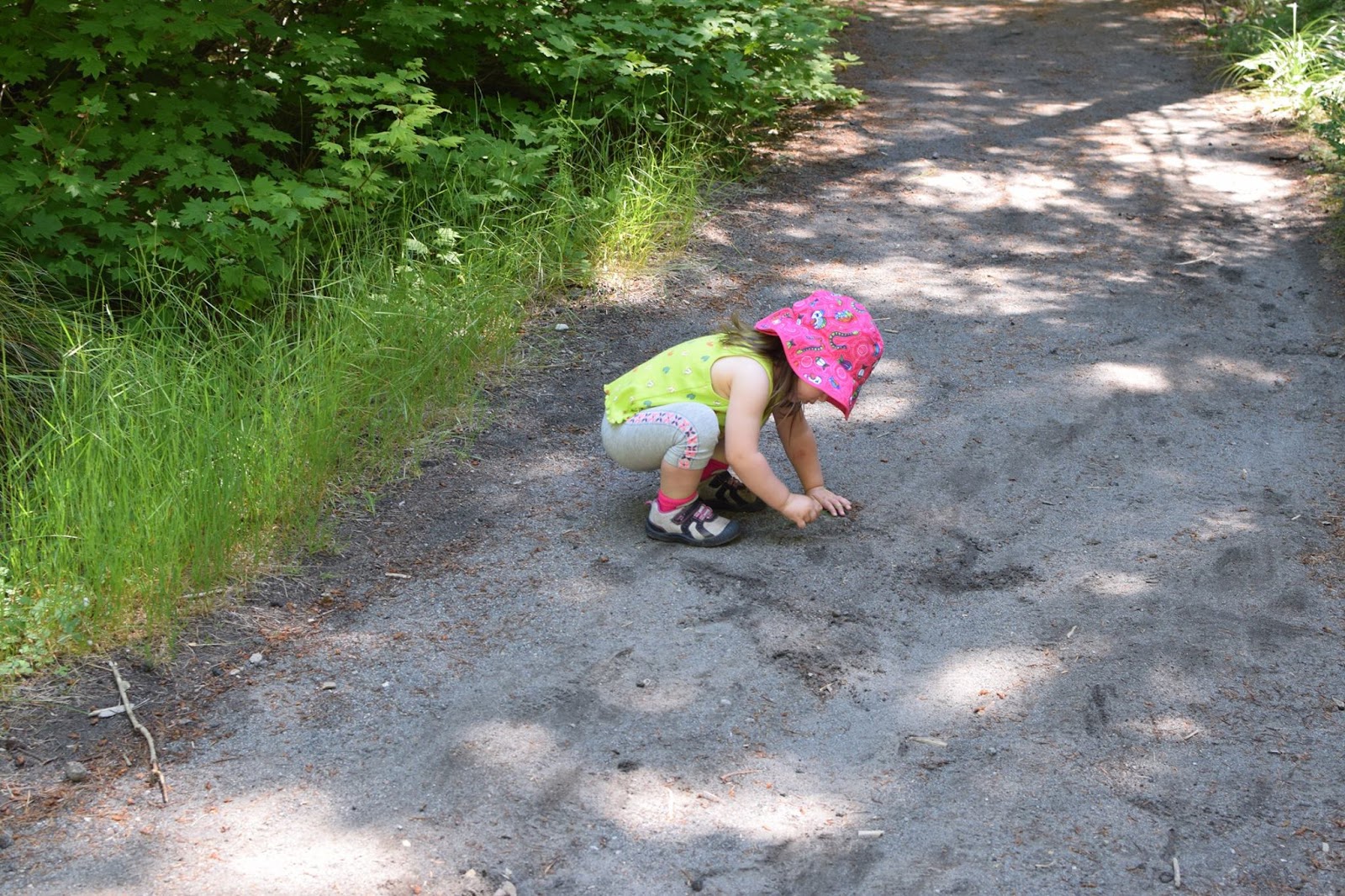
Toddlers don’t seem to be all that interested in hiking towards a goal or learning about what they encounter along the trail. Instead, most want to experience nature with their whole bodies and spend lots of time in one place. On hikes, it is common for toddlers to plop down in the middle of the trail for dirt play, run into a creek and get soaking wet, pick plants, wave sticks, refuse to walk, and sometimes even have a huge fit on the trail. (Pro tip: Turn back BEFORE kids get tired and cranky.)
If you want your toddler to hike, it’s important to pick short trails without too many hazards like rushing water, drop-offs, poison oak, etc. Unfortunately, you cannot totally eliminate all hazards in nature and, on any trail, you will still need to keep an eye on what your kids put in their mouth (mushrooms and toxic plants!) and keep kids from running ahead out of sight. That said, there are trails that are better for toddlers. Below are six of these better-for-toddlers hikes, all within a 30-minute drive of Portland.
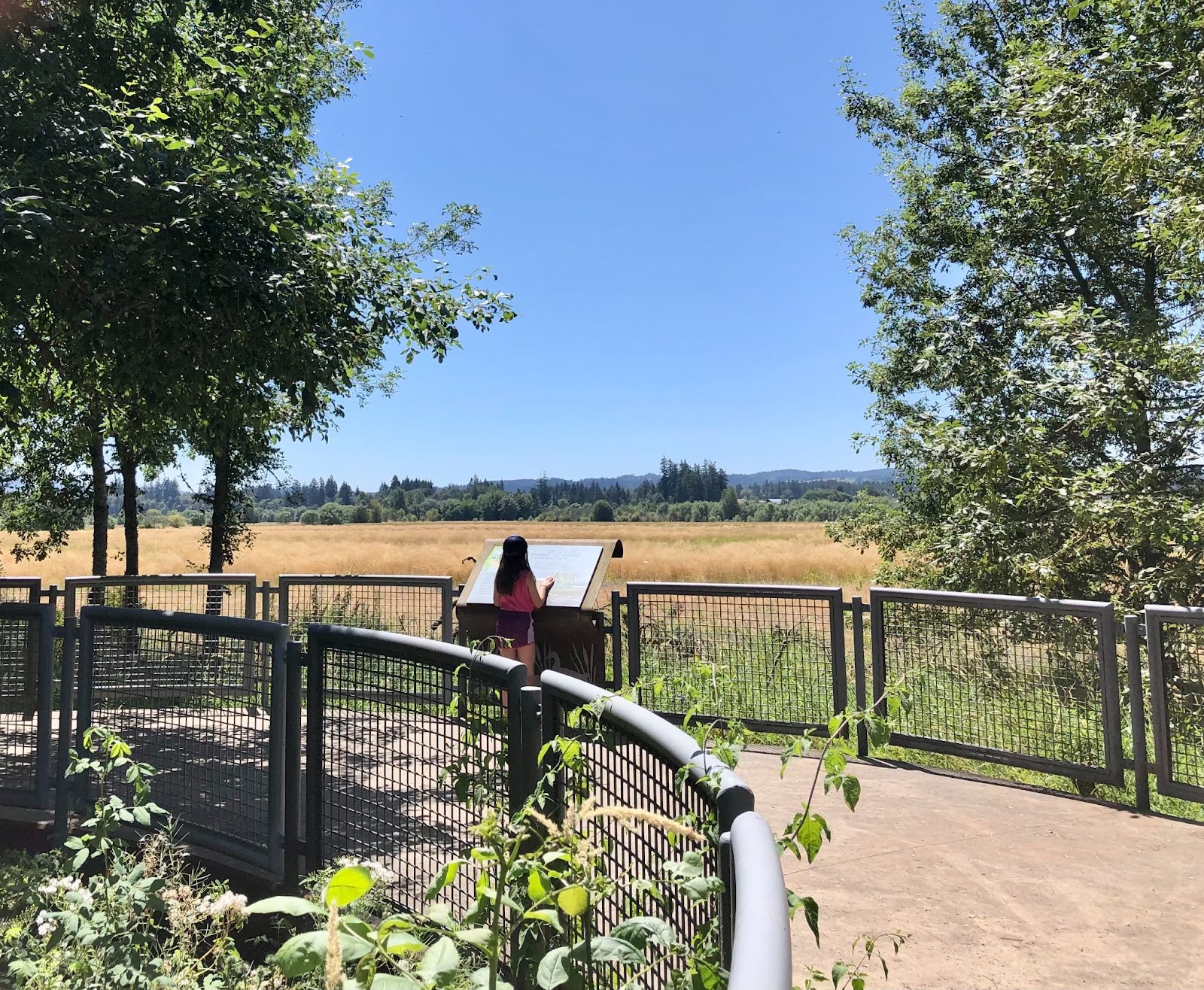
This awesome park in Beaverton has 1.5 miles of paved trail and 3.5 miles of non-paved trails. Dogs are not permitted in the park, so the park is a great place to view wildlife like deer, birds, and amphibians. You will want to keep an eye out for bikes on the paved trails and avoid the trails that get too close to the ponds if your kids tend to run towards water. Restrooms and fun exhibits are available at the nature center.
There is a lovely forest tucked away in the middle of a Brush Prairie neighborhood and it’s a great place for toddlers to roam. In addition to several flat trails, you will find many climbing logs, massive trees (perfect for hugging and peering into), and lots of shade. You may even have a midday owl sighting. The Red Cedar Trail and Fir Loop are great for toddlers as long as you don’t take the side trails to a viewpoint and the creek. The Alder loop can be quite muddy and have some stinging nettle along the trail. There are no restrooms available here. Please respect the neighbors and do not block driveways.
Columbia Springs is a neat place for toddlers. There are five short trails that combine to make a 2 mile hike. The trails vary in difficulty and trail surface. There are plenty of trees and rocks to climb on, as well as two wildlife viewing decks, hatchery fish tanks, and a fish feeding pond. There are bathrooms onsite.
There are so many trails at Hoyt Arboretum and they vary in toddler-friendliness. For the most toddler-friendly hike here, start out on the paved accessible trail as seen on this awesome map from Super Nature Adventures. For a more challenging toddler hike, check out the trail from Stevens Pavilion, past the Fairy Forest, and along the Spruce Trail to the Redwood Deck. The loop beyond this gets less toddler-friendly. You could also check out the Magnolia Loop, but there are a few road crossings that require some hand-holding. Hoyt has a lot of kid-friendly activities as well.
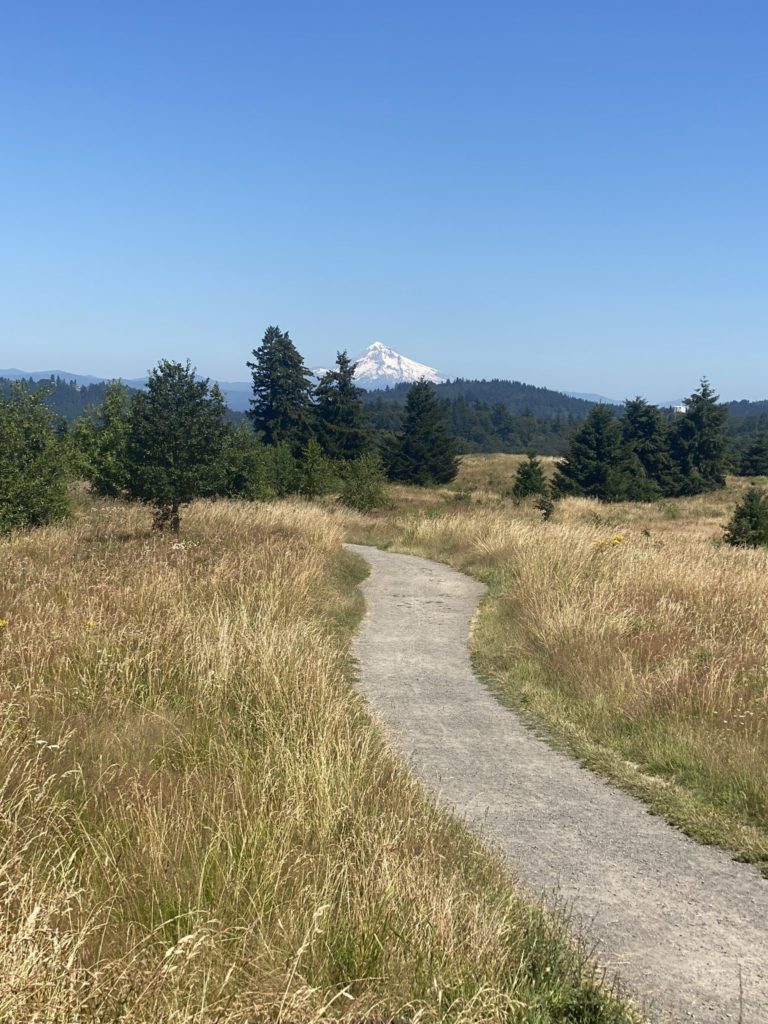
Powell Butte Nature Park is an excellent spot for kids to work on their uphill hiking and take in distant mountain views, all while hiking on an ancient and extinct volcano. The most toddler-friendly section of the park is the uphill paved Mountain View Trail. It is a 0.7 mile hike to the Mountain Finder overlook, where on clear days you will see the five closest major volcanoes and some lesser mountains. The Mountain View Trail doesn’t have much shade, so be sure to bring sun protection. From the Mountain Finder overlook, you could also add on the 0.8 mile Summit Lane loop. The visitor’s center has restrooms and displays.
Tualatin River National Wildlife Refuge is one of several kid-friendly wildlife refuges in our area. Here you can hike 2 miles out-and-back on the year-round River Trail to a wetland observation deck. This gravel trail can be used by all-terrain strollers and there are no dogs allowed, which allows you to see tons of wildlife like birds and deer. There are a few spots along the trail that come close to water, but the trail is wide and you should be able to keep kiddos away. There is one drop-off down to the creek just past the trail junction with the Ridgetop Overlook trail (so just grab your kiddo’s hand at this junction and release when you pass the drop-off). Leave some time to explore the nature center. Flush toilets are available near there. Learn more here.
Credit: Jessica Becker
Bonus Tips
Find trails with nearby playgrounds to incentivize (just don’t let kids see the playground before your hike)
Hike in the morning when temperatures are cooler and bellies are full from breakfast
Bring lots of snacks and water in a fun reusable water bottle; bring a high-value snack for when times get really desperate
Bring ways to engage your kids (like magnifying glasses or a stuffy/doll), but wait to bring them out until you need them
Expect that you will walk slowly, make lots of stops, and mentally prepare yourself that you may not complete your hike as expected
Bring a back-up carrier
Encourage kids to keep going and proudly celebrate small wins
Know that your kids will get older and be able to hike farther; toddler hiking is all about exploration and instilling a love of nature
Originally posted on PDXParent.com on July 1st, 2022
Credit: Cody Nichols, Alltrails.com
Summer in the Pacific Northwest means it’s time for adventure! We have just a few months to soak in all the warmth and sun — what better place to do that than on the trail? Longer days and great weather means it’s easier to travel a little bit further from home, too. While the weather is milder in summer, there are some unique considerations for summer hiking with kids:
If it is warm in town, it still may be cool in the mountains. On the morning of your hike, check daytime and overnight weather conditions and make sure to bring the right gear.
Check out these family-favorite hikes for experiencing summer in our area:
Mary Young and Cedar Island – Portland Area
Credit: Kim Koga, Alltrails.com
Mary S. Young Park is an excellent choice for a summer hike. The shady forest offers respite on hot summer days, and the seasonal bridge over to Cedar Island allows hikers to reach a neat island on the Willamette River. On the island the beach is a mix of rocks and sand, and there is a fishing platform available, too. This park is popular with dog-owners and you may encounter some dogs off leash. It is only about a 0.5 mile hike from the main parking area to Cedar Island, but you can add on trails to make an almost 4 mile hike. Parts of the trail are ADA-accessible and the park can be reached by bus.
Whipple Creek Regional Park – Vancouver Area
Credit: Jessica Becker
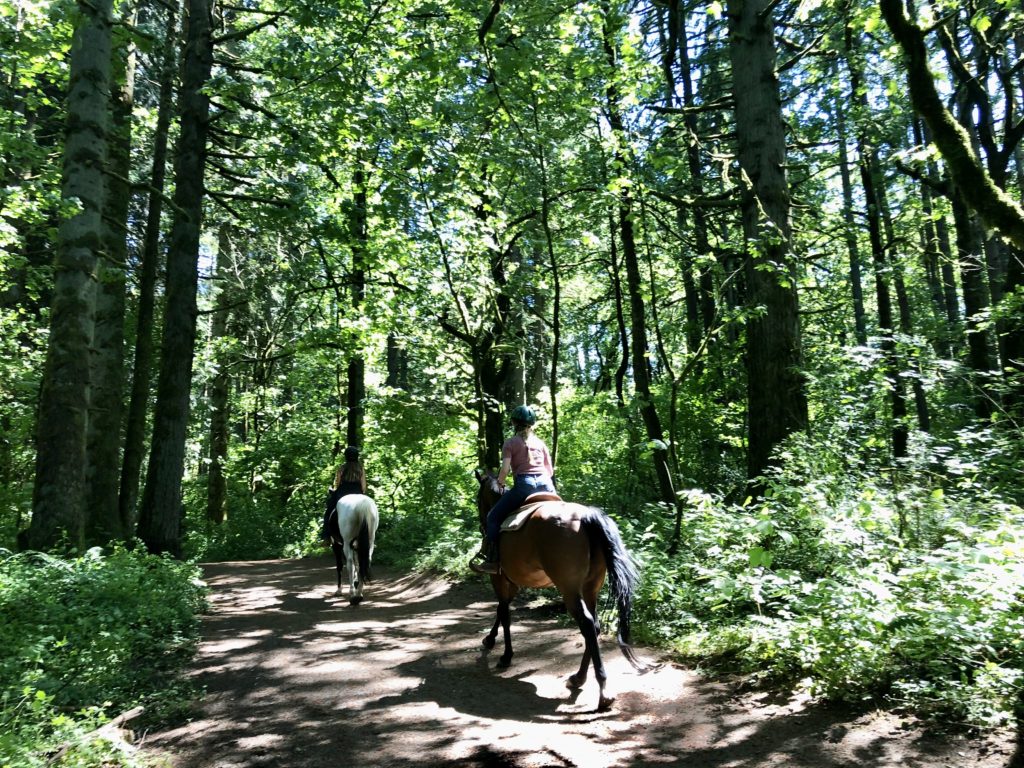
Take a break from the warm days of summer by hiking through the cool and shady forests that make up Whipple Creek Regional Park. There are 4.3 miles of trails, but you can combine different trails to suit your needs. This park is popular with horses, so read up on horse etiquette before hitting the trail.
Pool of the Winds – Columbia River Gorge, Washington Side
Credit: Meg Asby
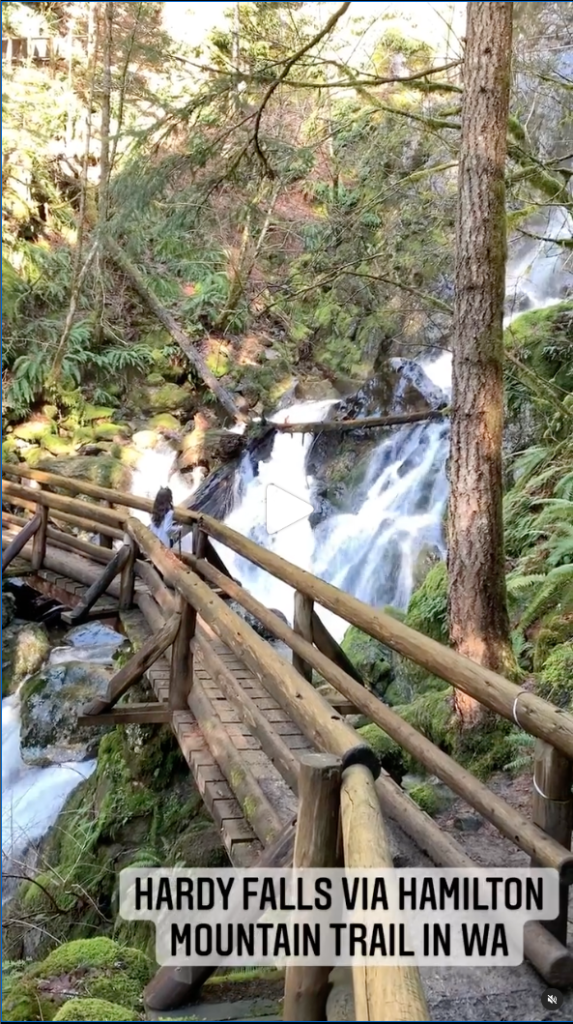
This hike takes you to a beautiful waterfall by way of lovely forest and passing views of Hamilton Mountain, Bonneville Dam, and the Columbia River Gorge. If you look at the falls in the right light, you may even see a rainbow! The Pool of the Winds Hike is only about 2 miles round-trip and requires a steady climb from the trailhead. Make sure to pick up a Washington Discover Pass before heading to the trailhead.
Sherrard Point – Columbia River Gorge, Oregon Side
Credit: Aaron B., Alltrails.com
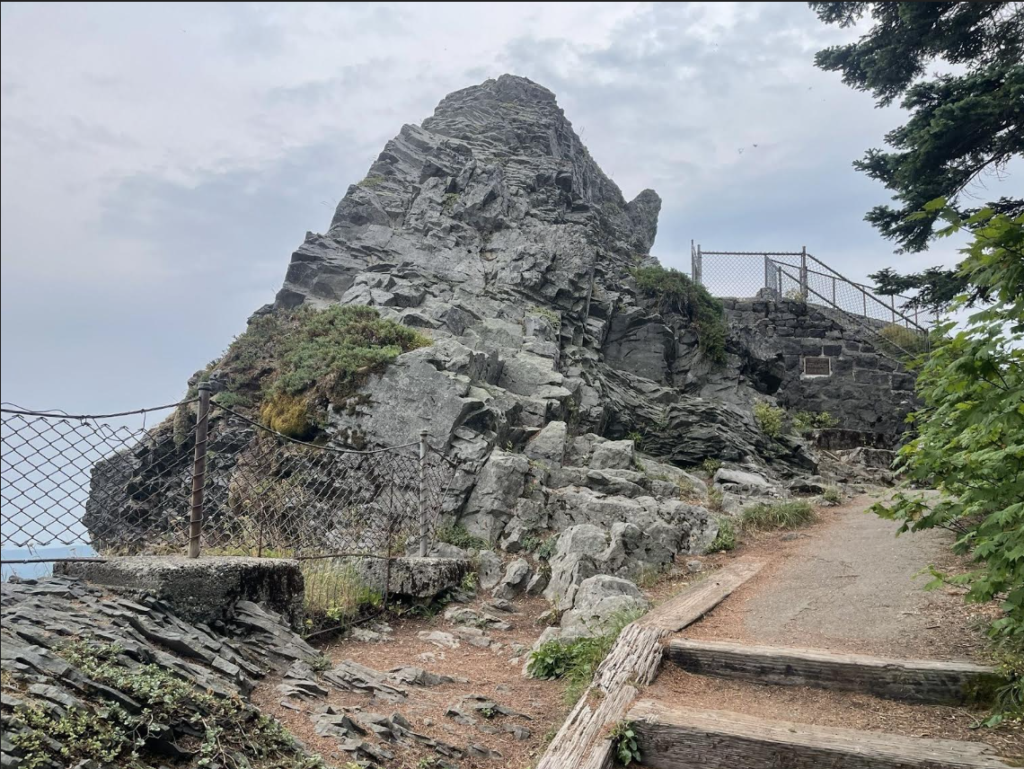
Once the snow has melted (usually sometime in June), you can summit an ancient and extinct volcano without much work at all! By climbing up a 0.3 mile one-way paved path and several sets of stairs, you can reach the top of Sherrard Point, the summit of Larch Mountain. On a sunny day, you can see five volcanoes from this fenced-in summit viewpoint. You’ll need to keep a hand on younger kiddos since the viewpoint has extreme drop-offs and it is unclear how sturdy the railings are. For a longer hike, you can head north from the parking area on Larch Mountain Trail #441. The forest is quite spooky through here and you’ll encounter some amazing trees as you hike along. The trail is only downhill from the parking area, so remember that you’ll need to come back up the hills when you turn around.
June Lake – Mt. St. Helens Area
Credit: Jessica Becker
The trail to June Lake really has it all: a waterfall splashing into a pretty lake, views of Mt. St. Helens, rough-skinned newts, a lava field, wildflowers, and a paved road all the way to the trailhead. There isn’t even a pass required. This moderate hike is around 2.8 miles round-trip and has some elevation gain, as well as a rocky trail. Keep in mind that the trailhead has no toilet or cell service. Consider combining the hike with a visit to Lava Canyon or the Trail of Two Forests. There are toilets at both of these locations.
Zigzag Canyon and Little Zigzag Canyon – Mt. Hood Area
Credit: Jessica Becker
The Timberline Trail heading west from Timberline Lodge offers such an epic kid-friendly mountain experience. The snow melts in July and is soon followed by amazing wildflowers. From the trail, you will have views of high desert to the east, Mt. Jefferson and mountain lakes to the south, and Portland to the west. Consider combining this hike with a camping trip in one of Mt. Hood’s many campgrounds. The trail is 2.4 miles round-trip to Little Zigzag Canyon and 4.4 miles round-trip to Zigzag Canyon. This hike is for more experienced kid hikers and parents should use caution near drop-offs, especially at Zigzag Canyon.
Do you love wildflowers and volcano views? Yeah, so do I
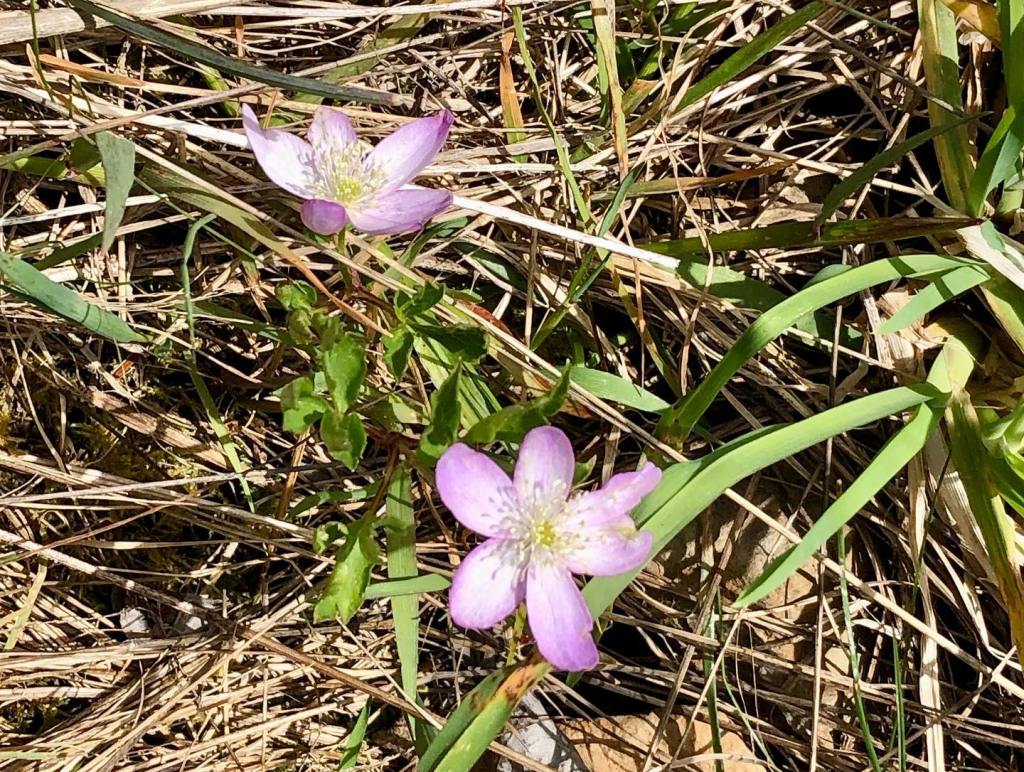
I’m always telling you all about the under-rated Tarbell Trail in the Yacolt Burn State Forest (write-up in “little feet hiking“). This time of year, the area is full of native wildflowers, migratory birds, animal tracks, and volcano views (on clear days of course). I’ve been hiking this trail for 10 years and it has been so neat to see the clearcut forest grow back and the diversity of the plants growing along the trail. Today, I saw anemone flower blooming and tiger lily not far behind.
The best time to visit if you want to see wildflowers is late May through June. Keep an eye out for wild irises and lupine in the more open areas, and beargrass when hiking through the shadier forest section.
Wild iris and lupine blooming on the trail in June
Remember to bring your WA Discover Pass, sun protection and extra water on this hike. On sunny days, there isn’t much cover from the sun. Also, avoid drinking the non-potable water at the trailhead (the water is for horses) and watch out for mountain bikes zooming down the trail.


















 little feet hiking